Fermented Vegetables: Creative Recipes for Fermenting 64 Vegetables and Herbs in Krauts, Kimchis, Brined Pickles, Chutneys, Relishes and Pastes Review (2026)
Updated September 14, 2026 · Research-based review
Our verdict
Fermented Vegetables suits anyone with a garden glut or a farmers market habit who wants a clear, recipe-by-recipe path into krauts, kimchis, pickles and pastes. Its main strength is the vegetable-by-vegetable index, and the trade-off is that it skips kombucha, dairy and koji entirely.
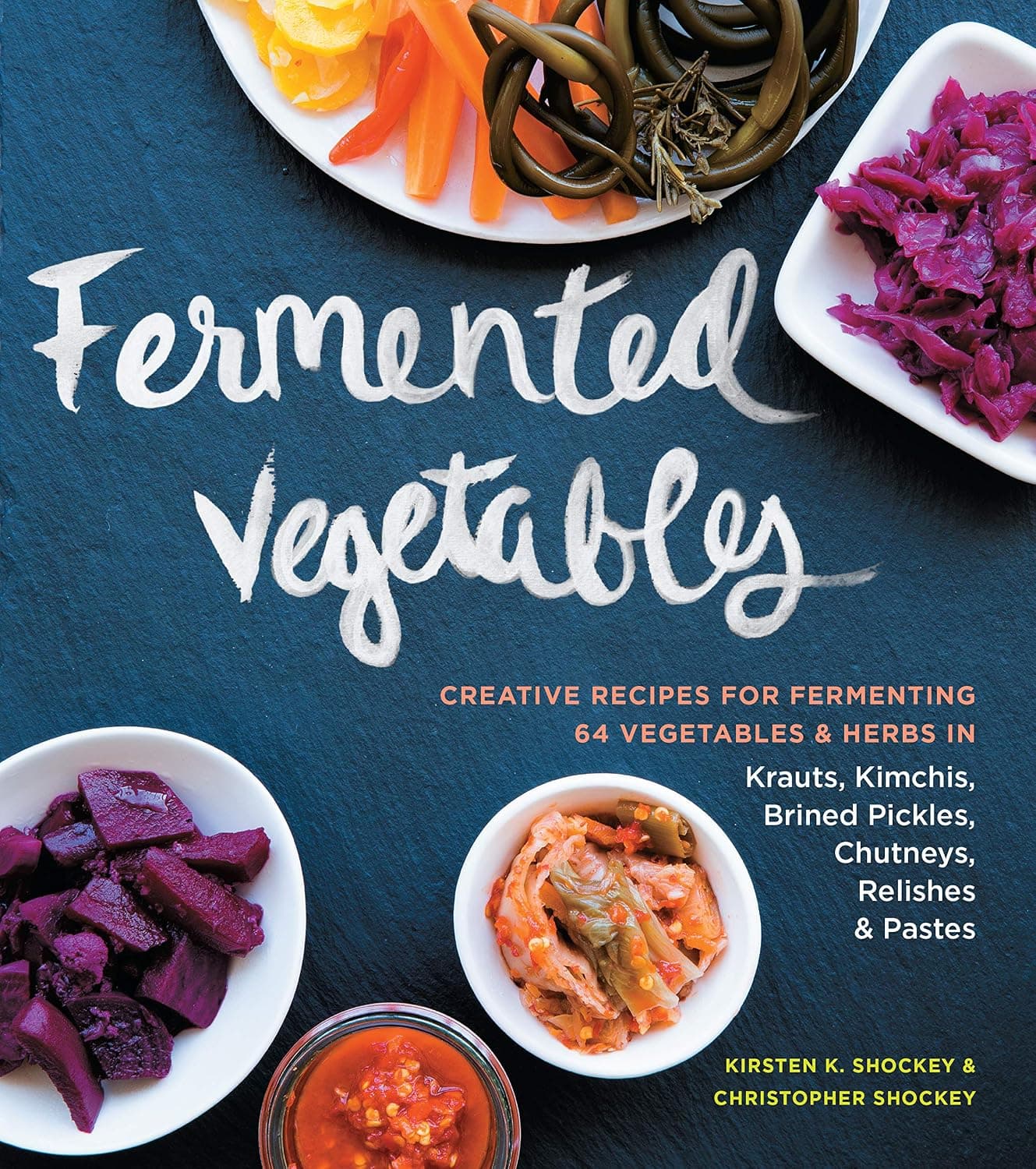
Fermented Vegetables, a recipe book for fermenting 64 vegetables and herbs in krauts, kimchis, brined pickles, chutneys and pastes.
Price range: See on Amazon
What we liked
- + 64 Vegetables and Herbs are covered one by one, handy for gardeners with gluts
- + Mix of krauts, kimchis, pickles and relishes adds plenty of variety
- + Clear basic methods make it a strong book for vegetable ferments
Trade-offs
- - Vegetable-only scope leaves out kombucha, dairy and koji
- - Some recipes call for produce that is hard to find out of season
Who this book is written for
Fermented Vegetables by Kirsten K. Shockey and Christopher Shockey is built for home cooks who already have a pile of produce and want to know what to do with it. Storey Publishing released the 376 page paperback in October 2014, and its organizing idea is simple: instead of grouping recipes by technique alone, it walks through 64 vegetables and herbs one by one, from cabbage and carrots to radishes, garlic scapes and fresh turmeric. That structure makes it especially handy for gardeners and CSA subscribers who end up with more of one crop than they can eat fresh. Someone who wants a single all-purpose reference covering dairy kefir, kombucha or grain ferments will need a second book, but for the specific job of turning vegetables into krauts, kimchis, brined pickles, chutneys, relishes and pastes, the format is hard to beat.
How the recipes are laid out
Each vegetable entry opens with a short primer on how that ingredient behaves in a brine or a dry salt ferment, then moves into several named recipes, so cabbage alone spans multiple kraut and kimchi variations rather than one master formula. The authors explain ratios for salt to vegetable weight, timing cues for taste testing, and troubleshooting notes for common issues like soft texture or a stalled ferment. Recipes lean on equipment most kitchens already have, such as wide mouth jars, a plate or small weight, and a clean towel, so a beginner is not required to buy specialized gear before starting the first batch. The pastes, relishes and chutney chapters extend the book past raw ferments into condiments meant for longer storage, which widens its use beyond a single season of fresh vegetables.
Using it week to week
In practice, the book works well as a rotating reference kept near the kitchen counter during harvest months, since most entries are only a few pages and can be read start to finish before a batch goes into the jar. The vegetable index at the front lets a cook look up what to do with an unfamiliar item quickly instead of hunting through a full table of contents. Because the recipes are grouped by ingredient rather than by finished dish, it also works as a way to plan meals around whatever needs using up, which suits people who buy in bulk from a farm stand or grow their own. Storage guidance for finished ferments is included at the ingredient level, covering how long a given kraut, kimchi or paste typically keeps once it moves to the refrigerator.
Where it falls short and how it compares
The clearest limitation is scope. This is a vegetable fermentation book, full stop, so it has nothing on kombucha, milk kefir, tempeh or koji, and readers chasing those projects should look at a broader title like The Art of Fermentation, Sandor Katz's wide ranging reference that covers dairy, grains and beverages alongside vegetables. Wild Fermentation, also by Katz, sits closer in spirit as an approachable introduction but still ranges beyond vegetables into drinks and breads. A second, smaller issue is that some recipes call for produce that is genuinely hard to source outside its growing season, which can leave a reader waiting months to try a specific entry. Neither point undermines the vegetable focused recipes themselves, which remain clear and well tested throughout the book.
Verdict and who should look elsewhere
For anyone whose fermentation interest starts and mostly stays with vegetables, this book earns its place as a go-to reference, which is reflected in our score of 9.2 out of 10 and its rank as our top pick among fermentation books. It rewards cooks who want concrete, ingredient-specific guidance over abstract theory. Readers who want one book to cover the entire fermentation world, including dairy, grains and fermented beverages, are better served starting with The Art of Fermentation instead, then adding this title later once vegetables become the main focus. Gardeners, market shoppers and anyone building a rotation of pickles, krauts and kimchis should be very satisfied with the depth on offer here.
Frequently asked questions
Does Fermented Vegetables cover kombucha or dairy ferments?
No. The book is focused entirely on vegetables and herbs turned into krauts, kimchis, brined pickles, chutneys, relishes and pastes, so kombucha, dairy and koji projects are outside its scope.
Is this book suitable for a first-time fermenter?
Yes. Each vegetable entry explains basic salt ratios and timing in plain language, and most recipes use simple jar-and-weight equipment rather than specialized gear.
How is the book organized?
Recipes are grouped by vegetable or herb, covering 64 in total, rather than by finished dish, so a cook can look up a specific ingredient and see several ways to ferment it.
How does it compare to The Art of Fermentation?
The Art of Fermentation is a broader reference spanning vegetables, dairy, grains and beverages, while Fermented Vegetables goes deeper on vegetable and herb recipes specifically.
Prices change often, so check the current price and availability on Amazon.
Check price on AmazonFerment Nest may earn a commission from the link above.