Get Kombucha Continuous Brew Kit with 2.5 Gallon Porcelain Brewing Vessel and Handcrafted Wood Stand Review (2026)
Updated September 14, 2026 · Research-based review
Our verdict
A good pick for a household that drinks kombucha daily and wants a always-on tap rather than rotating batch jars. The porcelain vessel and wood stand look like real furniture, but the opaque walls and the vessel's weight make it a bigger commitment than a glass jar setup.
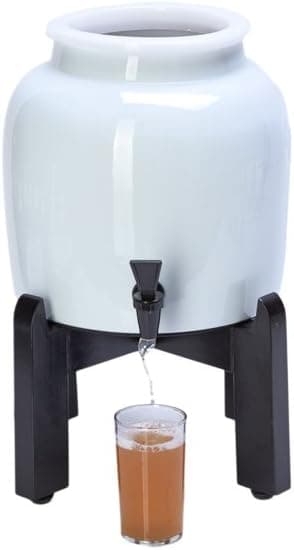
Get Kombucha's continuous brew kit with a 2.5 Gallon porcelain brewing vessel and a handcrafted wood stand.
Price range: See on Amazon
What we liked
- + Porcelain vessel blocks light and holds temperature steadier than thin glass
- + 2.5 Gallon size supports a large continuous brew for a busy household
- + Handcrafted wood stand makes a sturdy and attractive brewing station
Trade-offs
- - Opaque porcelain hides the SCOBY, so checking the brew means lifting the lid
- - Heavy ceramic vessel is hard to lift and clean in a standard sink
Who this continuous brew kit suits
This kit is built for kombucha drinkers who want a steady, always-ready supply instead of juggling several one gallon batch jars on a rotation. The 2.5 gallon porcelain vessel is large enough that a household of two or three regular drinkers can draw a glass or bottle from the spigot most days without the tea running dry. Continuous brewing also spreads out the workload: instead of starting and bottling a whole batch at once, you top off tea and sugar water as you pour off finished kombucha, which suits people who like a routine more than a project. It is a poor fit for anyone who only drinks kombucha occasionally, since a large vessel kept topped off needs regular attention, and for renters or small kitchens where a floor-standing porcelain vessel and wood stand take up more permanent counter space than a jar that can be tucked away between batches.
What is in the box and how it is built
The vessel itself is made from certified lead-free porcelain and holds 2.5 gallons, with the brewer measuring roughly a foot in each direction. It sits on a handcrafted wood stand that lifts the vessel to around two feet total height, high enough to slide a glass or bottle under the built-in spigot without tilting the whole jar. The kit ships with the brewer's own community support access, which is useful if you are new to continuous brewing and want troubleshooting help rather than working it out alone. Porcelain has a real advantage over glass here: it blocks light completely, which keeps the SCOBY and tea in a more stable environment than a sunlit glass jar, and it holds heat more evenly than thin glass does. The trade off is that porcelain hides what is happening inside, so you cannot glance at the vessel to check the SCOBY the way you can with a clear jar.
Living with a porcelain continuous brewer
Setting up a continuous brew system means starting with a strong SCOBY and enough starter liquid to acidify the full vessel, then topping it off with sweet tea as you draw kombucha out through the spigot. Because the porcelain is opaque, checking on the SCOBY means lifting the cloth cover rather than glancing through glass, so plan on periodic lid checks rather than visual monitoring. The wood stand needs a stable, dry spot since it is not sealed against constant moisture the way a plastic or metal stand would be, and the porcelain vessel itself is heavy once filled, making it awkward to move for cleaning. A dedicated spot near the spigot's tap height, close to an outlet if you use a heating wrap, works best. Between batches, rinse the vessel and the spigot mechanism thoroughly, since dried tea residue at the spigot joint is the most common source of leaks in ceramic continuous brewers.
Trade offs and how it compares
Against a glass continuous brewer like the Northern Brewer 2 gallon jar with a stainless spigot, this porcelain kit trades visibility for better light blocking and a sturdier feel, though the glass option is easier to inspect at a glance and generally lighter to clean in a sink. Compared with simpler stand-alone jars such as the Cultures for Health 5 liter glass jar, this kit's wood stand and larger 2.5 gallon capacity suit a bigger, more established brewing habit rather than a first attempt at continuous brew. The main downsides worth weighing are the vessel's weight, which makes lifting it off the stand for a deep clean a two-handed job, and the fact that a chipped or cracked porcelain vessel cannot be inspected for hairline cracks as easily as glass. Buyers who want to see their SCOBY daily, or who plan to move the setup often, will find a glass vessel more forgiving.
Verdict and who should look elsewhere
For a household committed to daily kombucha and who likes the look of a ceramic vessel on a wood stand, this kit delivers a sizeable, light blocking brewing station with our score of 8.4 out of 10 reflecting strong build quality and moderate value. It rewards people willing to do periodic lid checks rather than visual monitoring and who have a stable spot to keep it. Anyone just starting out with continuous brew, or who wants to watch the SCOBY without lifting a cover, should consider a glass vessel with a visible spigot instead, since it is lighter, easier to inspect, and simpler to clean in a standard sink. Beginners who are not yet sure kombucha will become a daily habit may also be better served starting with a single glass batch jar before committing to a large stationed porcelain system like this one.
Frequently asked questions
Does the porcelain vessel let me see the SCOBY without opening it?
No, porcelain is opaque, so checking on the SCOBY or the brew level means lifting the cloth cover rather than looking through the wall the way you can with a glass jar.
How tall is the brewer once it is on the stand?
The porcelain vessel is about a foot in each dimension on its own, and the handcrafted wood stand raises the whole setup to roughly two feet, giving enough clearance to slide a glass or bottle under the spigot.
Is the porcelain safe for direct food contact with an acidic brew like kombucha?
The vessel is made from certified lead-free porcelain, which is the standard material claim for kombucha brewing vessels, but always follow the included care and brewing guidance from the manufacturer.
How does this compare with a glass continuous brew jar for cleaning?
Glass jars are generally easier to inspect and rinse since you can see residue through the walls, while this porcelain vessel is heavier and needs the spigot area flushed carefully since buildup there is not visible from outside.
Prices change often, so check the current price and availability on Amazon.
Check price on AmazonFerment Nest may earn a commission from the link above.