Mr. and Mrs. Kefir Live Milk Kefir Grains, Live Probiotic Culture, 1 Teaspoon Review (2026)
Updated September 21, 2026 · Research-based review
Our verdict
A small teaspoon of live milk kefir grains meant to start a reusable culture rather than deliver a large batch on day one. The grains grow with regular feeding and can replace store-bought kefir long term, but shipping stress means the first few batches are often slower than what the culture eventually produces.
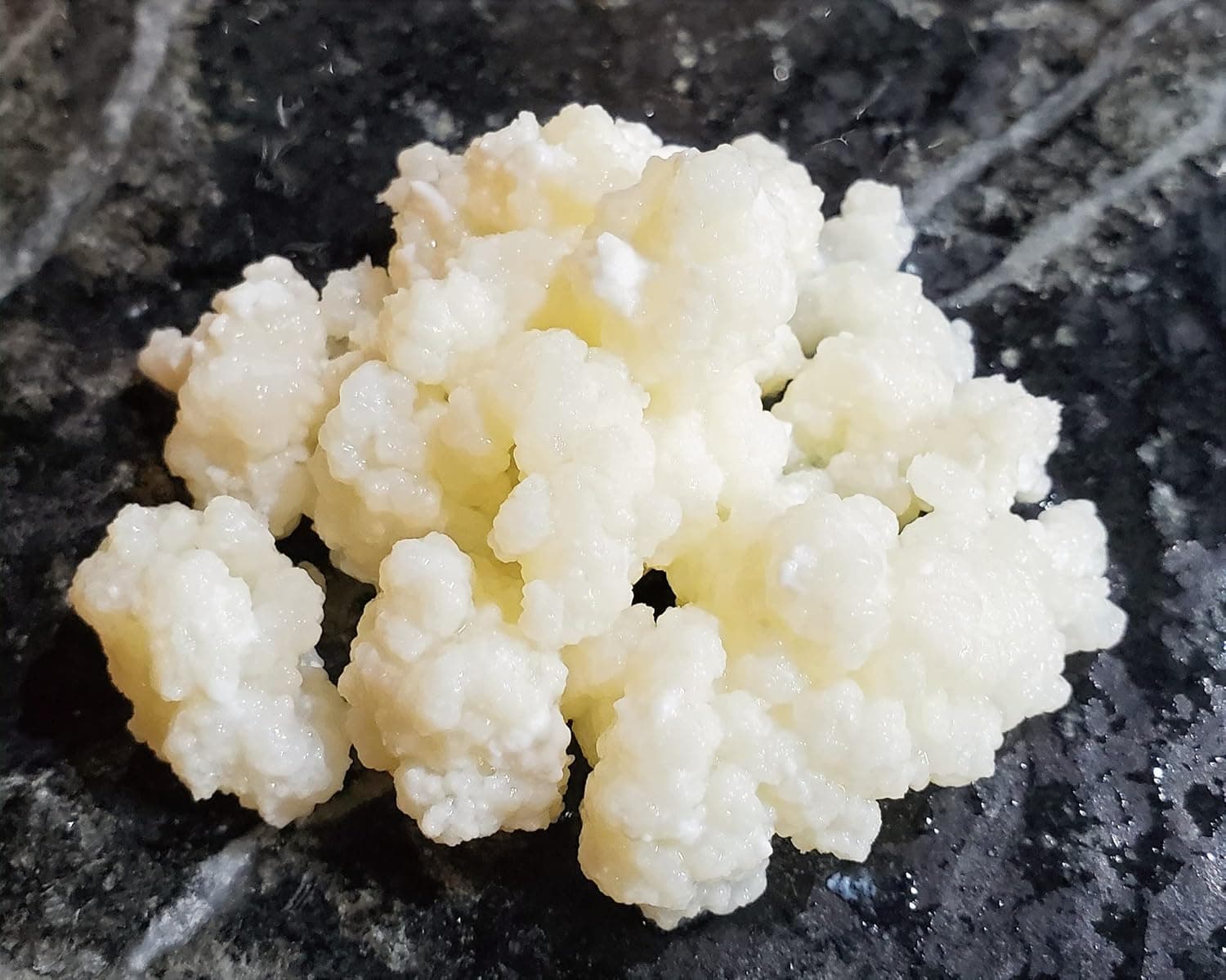
Mr. and Mrs. Kefir's live milk kefir grains, 1 Teaspoon of probiotic culture for starting homemade kefir.
Price range: See on Amazon
What we liked
- + Live grains start culturing milk within a day or two of arrival
- + 1 Teaspoon is enough to begin and the grains grow with each batch
- + Reusable culture replaces store-bought kefir for the long term
Trade-offs
- - Small starting amount means small batches until the grains multiply
- - Live grains can be sluggish after shipping and need a few feedings
What ships in this order
Mr. and Mrs. Kefir sends one teaspoon of live milk kefir grains, described by the seller as 100 percent natural and active, packed in a small, reusable screw-top jar for the trip. The order includes the brand's own written instructions along with a 3 by 4 inch cotton muslin bag that can be used to strain grains from finished kefir. The company positions itself as family run, with the founders' background tracing back through generations of brewmasters, and grains are packed and shipped the same evening to reach buyers as fresh as the mail allows.
How much kefir a teaspoon of grains makes
A teaspoon is a starter quantity, not a quantity meant to ferment a gallon of milk right away. Milk kefir grains are a living culture that multiplies as it ferments milk, so the amount of kefir a batch produces grows over the first several rounds as the grains themselves increase in volume. Someone expecting a large first batch from a single teaspoon should scale down their initial milk quantity accordingly, typically starting with a small jar of milk and increasing the amount as the grain colony grows large enough to handle more. Patience over the first few weeks generally pays off, since a healthy colony tends to double in size at a fairly steady pace when it is fed on a consistent schedule.
What to expect right after arrival
Live cultures that travel through the mail are commonly sluggish for the first feeding or two, since temperature swings and time in transit slow their activity even when they arrive alive. Grains from this seller should be fed a few times in plain milk before judging how well they ferment, rather than expecting full strength kefir from the very first batch. The seller's own storage guidance is to keep grains cool rather than freezing or dehydrating them, which preserves activity better than methods meant for long-term dormant storage. Using whole or full-fat milk for the first several feedings, rather than skim or ultra-pasteurized milk, is a common way to help a newly arrived culture recover more quickly.
Ongoing use once the culture is established
Once active, milk kefir grains are reusable indefinitely with regular feeding, meaning a single purchase can replace ongoing store-bought kefir purchases for as long as the culture is maintained. The included muslin bag is meant for straining grains out of finished kefir between batches, which is a common method alongside a plastic strainer. As the colony grows, excess grains can be shared, composted, or simply used to ferment larger batches, so the small starting teaspoon is not a limit on how much kefir the culture can eventually produce. Feeding on a regular schedule, usually daily to every couple of days with fresh milk, is what keeps the colony active and prevents it from over-fermenting into an overly sour batch.
Who this fits and who it does not
This suits someone willing to feed and maintain a live culture in exchange for a long-term, reusable source of milk kefir, rather than someone who wants a large batch immediately with no ramp-up period. Because the grains are alive and shipped without refrigeration control beyond same-day dispatch, buyers in extreme heat or during slow mail periods should expect more risk of a weakened culture on arrival. Anyone who wants a guaranteed large first batch or a freeze-dried, shelf-stable starter would be better served by a different kind of kefir product.
Frequently asked questions
How much kefir will one teaspoon of grains make at first?
Not much right away. A teaspoon is a starter amount, and the culture needs several feedings to grow before it can ferment larger batches of milk.
Is it normal for the grains to seem weak when they arrive?
Yes. Live grains that travel through the mail are often sluggish for the first feeding or two and typically strengthen after a few rounds in fresh milk.
Can the grains be reused indefinitely?
Yes, as long as they are fed regularly in milk, milk kefir grains are a reusable culture that keeps producing kefir over time.
How should the grains be stored if not used every day?
The seller recommends keeping them cool rather than freezing or dehydrating them, since those methods can reduce how active the culture is.
Prices change often, so check the current price and availability on Amazon.
Check price on AmazonFerment Nest may earn a commission from the link above.