Masontops Pickle Pebble Glass Infinity Weights for Fermenting - Wide Mouth Mason Jar Pickling Weight Set Review (2026)
Updated September 14, 2026 · Research-based review
Our verdict
A good pick for anyone who wants a trusted brand name on their fermentation weight and does not mind paying a bit more for it. The finger-hole shape makes lifting a submerged weight out of brine simple, and the glass matches the quality of the jar it sits in. The main trade-off is the modest pack size compared to bulk generic sets.
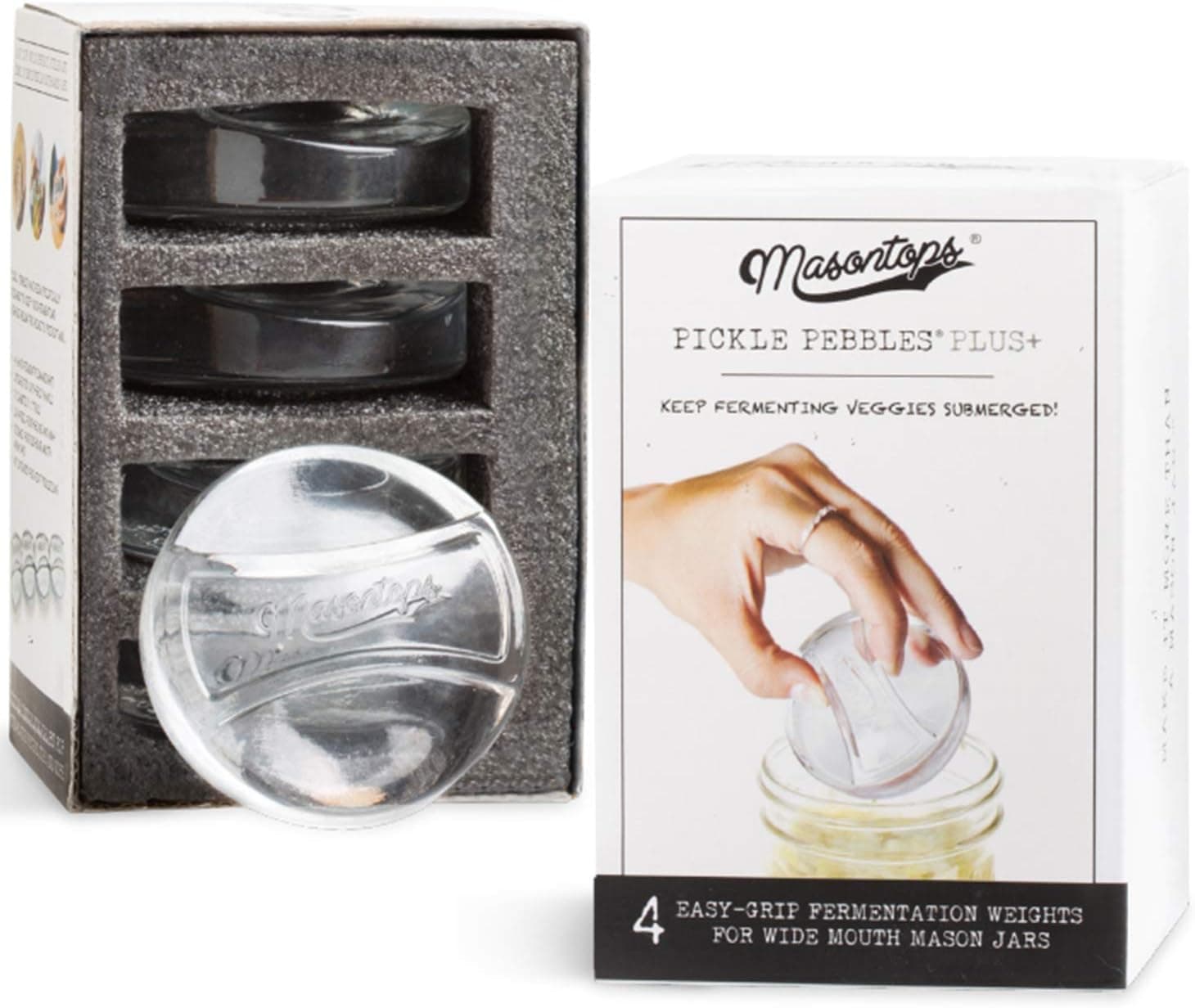
Masontops' Pickle Pebble Infinity glass weights for wide mouth mason jars, with a finger hole design for easy removal.
Price range: See on Amazon
What we liked
- + Infinity shape has finger holes, so lifting the weight out is simple
- + Masontops is a trusted name for mason jar fermenting accessories
- + Glass weights fit neatly inside the jar shoulder for full submersion
Trade-offs
- - Confirm the exact pack count in the listing before you order
- - Premium brand usually costs more per weight than generic sets
Who this weight suits
This is aimed at home fermenters who already own wide mouth mason jars, such as Ball, Kerr or Bernardin jars, along with Fido-style jars, and want a single reliable weight rather than a large bulk pack. Masontops built its name on mason jar fermenting accessories, and the Pickle Pebble is its signature weight. Anyone making small batches of sauerkraut, kimchi or pickles in one or two jars at a time gets the most value here, since one pebble is enough to hold shredded vegetables under the brine line. Cooks who run many jars at once, or who ferment large-format batches, may find that a bulk set of weights per jar works out cheaper per unit, even though the Pickle Pebble itself performs the same core job of keeping produce submerged and away from air.
What the glass and shape actually offer
Each Pickle Pebble is a round, wide mouth disc measuring about 2 3/4 inches across and roughly 3/4 inch thick, made from certified, lead-free, food-grade soda lime glass, the same material used in the mason jars themselves. The glass is non-porous, so it will not absorb odors, colors or bacteria from one ferment to the next, and it resists scratching better than plastic weights. The defining feature is the finger-grip cutout at the center, which gives the Infinity shape its name and lets you hook a finger or two straight through to lift the weight out without fishing around with tongs. One pebble is usually enough per jar, though owners can stack a second on top of a shallow ferment for extra downward pressure.
Setting it up and living with it day to day
Using the weight is straightforward: pack shredded or brined vegetables into a wide mouth jar, pour brine over the top, then lower the Pickle Pebble in so it presses the solids below the liquid line before sealing with a lid or airlock. Because the glass is heavy and dense, it stays put once it is submerged, which matters more than it sounds during the first bubbly days of active fermentation. Cleanup is simple, since the glass rinses clean under warm water. Masontops recommends hand washing with soap and water as the primary care method, and says the pebbles can also go on the top rack of a dishwasher as long as an extreme heat or sanitize setting is not used. The brand is explicit that Pickle Pebbles are not meant for boiling or other heat processing, so treat them purely as a fermenting tool, not a canning one.
Trade-offs against other glass weights on the shelf
Compared with an 8-pack of unbranded 2 3/4 inch glass weights built for the same wide mouth jars, the Masontops set gives you a recognized brand and a finger-hole grip in exchange for fewer pieces per purchase, which matters if you run several jars at once and would rather buy weights in bulk. Against a 4-pack of tempered glass weights from Mason Jar Lifestyle, the Pickle Pebble's main edge is that grip cutout, since flat discs without a handle or hole can be slippery to pull out of a deep jar once brine has made everything slick. None of these differences affect how well the ferment turns out, since any dense, food-safe glass weight will hold vegetables under brine equally well; the choice mostly comes down to grip comfort, pack size and how much you want to pay for the Masontops name.
Bottom line and who should look elsewhere
For a fermenter who values a well-known brand, an easy-to-grip shape and glass that matches the quality of a good mason jar, the Pickle Pebble earns its our score of 8.4 out of 10 rating with strong marks for fit and build. It is not the cheapest way to weigh down a jar, and the title alone does not always make the pack count obvious, so double-check the listing for how many pebbles arrive before buying. Anyone fermenting in large batches, running many jars simultaneously, or working with a tight budget will likely get better value from a bulk pack of generic glass weights instead, since the fermenting result is the same either way.
Frequently asked questions
How many Pickle Pebbles come in this set?
The wide mouth version is sold as a 4 pack of glass weights, based on retailer listings for this product.
Can I use a Pickle Pebble in a regular mouth mason jar?
This version is sized for wide mouth jars. Masontops sells a separate small or regular mouth version if your jars have the narrower opening.
Is it safe to run Pickle Pebbles through the dishwasher?
Masontops says top-rack dishwashing is fine as long as you avoid an extreme heat or sanitize cycle, and hand washing with soap and water is the recommended default.
Can I boil or can with this glass weight?
No. Masontops states the weights are not designed for boiling or heat processing, so use them only for fermenting, not for canning steps that involve high heat.
Prices change often, so check the current price and availability on Amazon.
Check price on AmazonFerment Nest may earn a commission from the link above.