Fermentaholics Jun Kombucha Starter Culture - USDA Certified Organic Jun SCOBY and Starter Tea, Makes 1 Gallon Review (2026)
Updated September 14, 2026 · Research-based review
Our verdict
A focused way to try jun tea, the honey and green tea cousin of kombucha, without guessing at ratios for a first batch. The organic certified SCOBY and starter tea take the risk out of a new ferment, but you will need your own jar and the ongoing cost of honey, which runs higher than the sugar a standard kombucha brew uses.
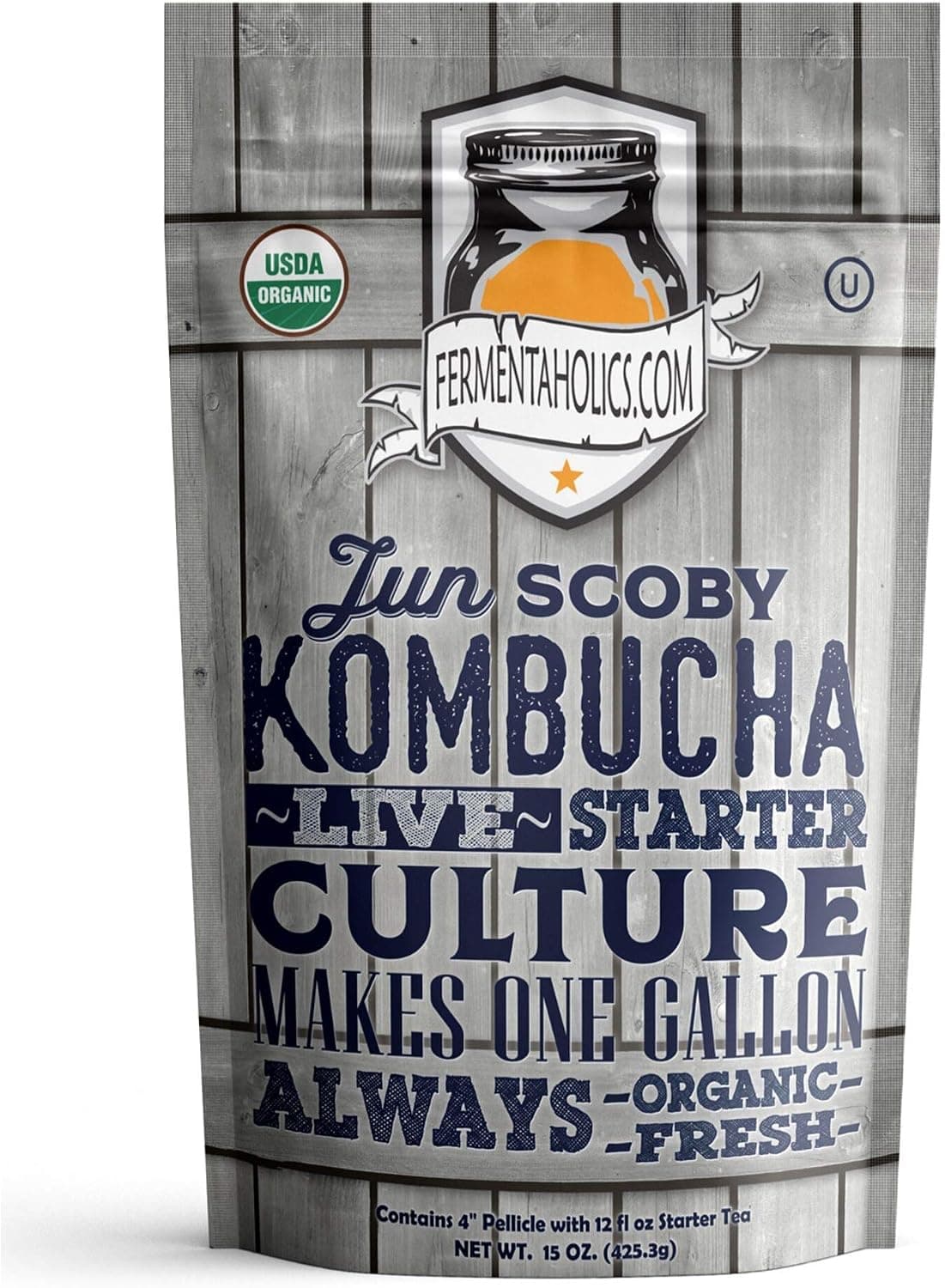
Fermentaholics' jun kombucha starter culture with USDA certified organic jun SCOBY and starter tea, makes 1 Gallon.
Price range: See on Amazon
What we liked
- + Jun SCOBY is adapted to green tea and honey, unlike standard kombucha cultures
- + Starter tea comes with it, giving the first gallon a protected start
- + USDA Certified Organic culture suits brewers seeking certified ingredients
Trade-offs
- - Honey and green tea for jun cost more than sugar and black tea
- - No jar or cover included, so brewing gear must already be on hand
Who this jun starter culture is for
This is built for kombucha brewers curious about jun tea, sometimes called the champagne of kombucha for its lighter, crisper flavor, which comes from feeding the culture green tea and raw honey instead of black tea and cane sugar. It suits anyone who already understands basic fermentation timing from brewing regular kombucha and wants to branch into a second, related culture rather than start fermentation from scratch. Because jun uses a different microbial balance than standard kombucha, a dedicated jun SCOBY like this one is a safer starting point than trying to convert a kombucha SCOBY. It is a weaker fit for someone brand new to fermented tea altogether, since jun's honey and green tea inputs cost more than kombucha's sugar and black tea, and a beginner may be better served learning on the cheaper, more forgiving standard recipe first.
What is included and how it is certified
The culture ships as a four inch SCOBY pellicle along with 12 fluid ounces of strong starter tea, sized to acidify and safely start a one gallon batch of jun. Fermentaholics states the culture is grown in a licensed lab and is USDA certified organic and kosher, which matters if you want documentation behind the culture rather than an informal home-grown SCOBY from another brewer. The starter tea itself carries a live, active microbial population, meant to lower the pH of your first batch quickly enough to protect it from unwanted mold while the new culture establishes itself. No jar, honey, green tea, or bottles are included with this listing, so those ingredients and a one gallon fermentation vessel need to be sourced separately before your first brew.
Living with a jun culture day to day
Once you have combined the SCOBY, starter tea, brewed and cooled green tea, and raw honey in your jar, jun tends to ferment faster than standard kombucha, often reaching a pleasant balance within five to seven days depending on your kitchen's temperature. Because raw honey has its own natural antimicrobial properties, jun can behave a little differently than a sugar based kombucha brew, so it helps to taste test starting around day five rather than waiting the full one to two weeks typical of kombucha. Like any SCOBY, the jun culture will produce a new layer with each batch, which you can use to start additional batches, share with other brewers, or store in a small amount of finished tea as a SCOBY hotel between brews. Keep the brewing jar covered with a breathable cloth and out of direct sunlight, the same basic care as a standard kombucha setup.
Trade offs and how it compares with other jun starters
Compared with a bundled option like the Deluxe DIY Jun Kombucha Brewing Starter Kit, which adds swing top bottles, a funnel, and a brush, this listing focuses purely on the culture itself, which suits someone who already owns bottling gear and jars and does not want to pay for extras they will not use. Against a generic, uncertified jun SCOBY sold by a smaller seller, this culture's organic certification and lab sourcing add a layer of documentation and consistency that an informal home-grown culture does not offer. The clear downside next to a full kit is that you are on your own for a jar, honey, and green tea, all of which add to the real cost of your first batch beyond the sticker price of the culture. Buyers who want a single purchase that covers everything should look at a bundled starter kit instead.
Verdict and who should pick something else
For an established kombucha brewer ready to try jun tea with a documented, organic certified culture, this starter earns our score of 8.4 out of 10 for delivering exactly what it promises without extra gear you may not need. It rewards someone who already has jars, honey, and green tea on hand or is happy to source them separately. Total beginners to fermented tea, or anyone who wants a single box that includes the jar and bottling supplies, are better served by a complete jun starter kit. Buyers on a tight budget should also weigh that honey costs more per batch than kombucha's usual sugar, so jun is a pricier ongoing habit than standard kombucha even though this starter culture itself is reasonably priced.
Frequently asked questions
What is the difference between jun tea and regular kombucha?
Jun uses a culture fed with green tea and raw honey instead of the black tea and cane sugar used for standard kombucha, which gives it a lighter, crisper flavor profile.
What size batch does this starter make?
The four inch SCOBY pellicle and 12 fluid ounces of starter tea are sized to safely start a one gallon batch of jun tea.
Does this come with a jar or honey?
No, this listing includes only the SCOBY and starter tea, so a one gallon jar, raw honey, and green tea need to be sourced separately.
Is the culture organic certified?
Fermentaholics states the jun culture is grown in a licensed lab and is USDA certified organic and kosher.
Prices change often, so check the current price and availability on Amazon.
Check price on AmazonFerment Nest may earn a commission from the link above.