Kombucha.com Tropical Breeze Brew Booster - Pineapple, Mango and Papaya Blend with Botanicals, 8 Ounce Review (2026)
Updated September 21, 2026 · Research-based review
Our verdict
Kombucha.com's Tropical Breeze is a loose-leaf blend of pineapple, mango and papaya for flavoring finished kombucha, iced tea or sangria, not for fermenting on its own. The 8 ounce size costs less per ounce than the 4 ounce option, but dried fruit pieces need straining before pouring into narrow bottles.
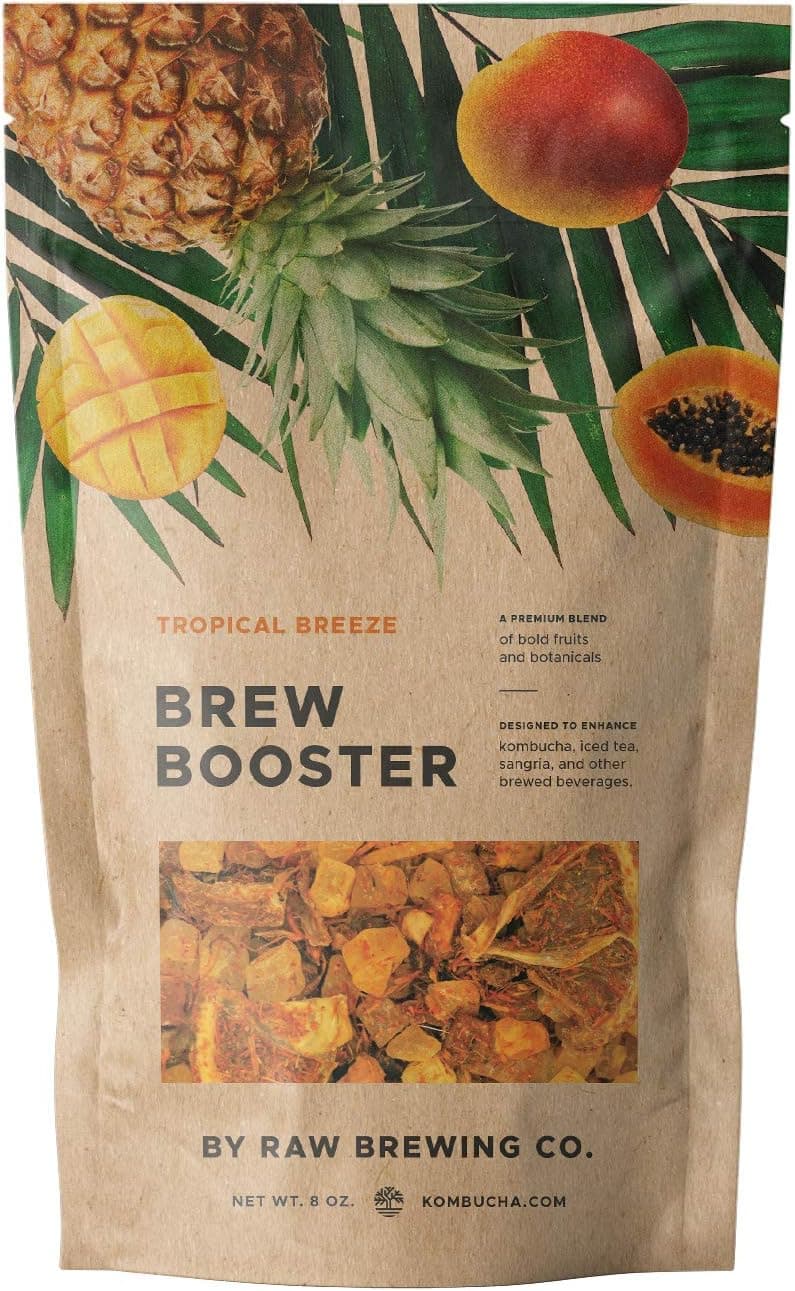
Kombucha.com's Tropical Breeze brew booster, an 8 Ounce pineapple, mango and papaya blend with botanicals.
Price range: See on Amazon
What we liked
- + Pineapple, mango and papaya create a bright tropical second ferment
- + 8 Ounce size gives better value for regular bottling than smaller pouches
- + Dried tropical fruit avoids peeling and chopping on bottling day
Trade-offs
- - Dried fruit pieces can clog narrow bottle necks without a funnel
- - Sweet tropical blend can push carbonation high, so burp bottles
What is actually in the blend
The ingredient list for this blend is pineapple, papaya and mango, each preserved with a small amount of cane sugar and citric acid, along with apple pieces, natural flavor, orange slices, safflowers and hibiscus. That combination of three tropical fruits plus supporting botanicals like hibiscus and safflower is what gives the blend its color and tartness alongside the core tropical sweetness, rather than relying on pineapple, mango or papaya alone. It is sold as a loose-leaf product rather than a liquid syrup or extract, so it steeps more like a tea blend than a bottled flavoring.
How it is meant to be used
The maker's instructions call for steeping the blend in a muslin bag or tea ball directly in refrigerated finished kombucha for anywhere from 4 to 72 hours, with a longer steep producing a stronger flavor, then straining it out before serving. For a carbonated result, the brew is left at room temperature with the blend still steeping and then bottled for a secondary fermentation. Kombucha.com is explicit that the SCOBY and starter liquid should be set aside before adding this booster, since it is meant to flavor a batch that has already finished its primary fermentation rather than to be fermented directly.
Why the 8 ounce size is the better value
Kombucha.com sells this blend in multiple sizes, and per-ounce pricing favors the larger options, with the 8 ounce size costing noticeably less per ounce than the 4 ounce pouch. For anyone flavoring kombucha regularly rather than as a one-off experiment, buying the 8 ounce size stretches further across more batches for less total cost per batch than repeatedly buying the smaller pouch. Someone trying tropical kombucha flavors for the first time and unsure if they will like it may still prefer the smaller 4 ounce size to limit the upfront cost.
Handling dried fruit pieces at bottling time
Because the blend includes actual dried fruit and botanical pieces rather than a filtered liquid extract, straining matters at two points: once after steeping to remove the bulk of the solids, and again if any small fragments make it into the final pour, since dried fruit bits can clog a narrow swing-top or standard bottle neck. Using a fine mesh strainer or a funnel with a built-in screen when transferring flavored kombucha into bottles helps avoid this. The blend's dried tropical fruit also tends to add real sugar into the second ferment, which can push carbonation higher than an unflavored batch, so bottles should be burped periodically rather than left fully sealed.
Who should buy it
This blend suits kombucha brewers who want a tropical, fruit-forward flavor built from actual dried pineapple, mango and papaya rather than an artificial extract, and who brew often enough to make the 8 ounce size worth the larger upfront cost. It also works for flavoring iced tea or sangria beyond just kombucha, since the maker markets it for multiple uses. Buyers should plan to strain the finished liquid before bottling and to burp bottles during a carbonated second ferment, since the added fruit sugar tends to raise carbonation compared with an unflavored batch. Someone brewing only occasionally, or unsure whether tropical flavors suit their taste, may still prefer the smaller 4 ounce pouch to try it first before committing to the larger size.
Frequently asked questions
What fruits are in the Tropical Breeze blend?
Pineapple, papaya and mango, each with a small amount of cane sugar and citric acid, plus apple pieces, natural flavor, orange slices, safflowers and hibiscus.
Do I ferment kombucha with this, or add it after?
It is added after primary fermentation is finished, steeped in the brew for 4 to 72 hours and strained out, with the SCOBY and starter liquid set aside beforehand.
Is the 8 ounce size worth it over the 4 ounce?
For regular brewers, yes. It costs less per ounce than the smaller 4 ounce pouch, so it is the better value if you flavor kombucha often.
Will dried fruit pieces clog my bottles?
They can if not strained well. Use a fine mesh strainer or funnel screen when bottling, and burp bottles periodically since the added fruit sugar can raise carbonation.
Prices change often, so check the current price and availability on Amazon.
Check price on AmazonFerment Nest may earn a commission from the link above.