Crazy Korean Cooking Premium Kimchi Sauerkraut Fermentation and Storage Container with Inner Vacuum Lid 1.3 Gal Review (2026)
Updated September 20, 2026 · Research-based review
Our verdict
This 1.3 gallon vacuum-lid container fits a full head or two of napa cabbage kimchi and then lives in the fridge as the storage box. The clay-blended plastic and adjustable inner lid keep air off the ferment, but expect the plastic to pick up red staining from gochugaru over repeated batches.
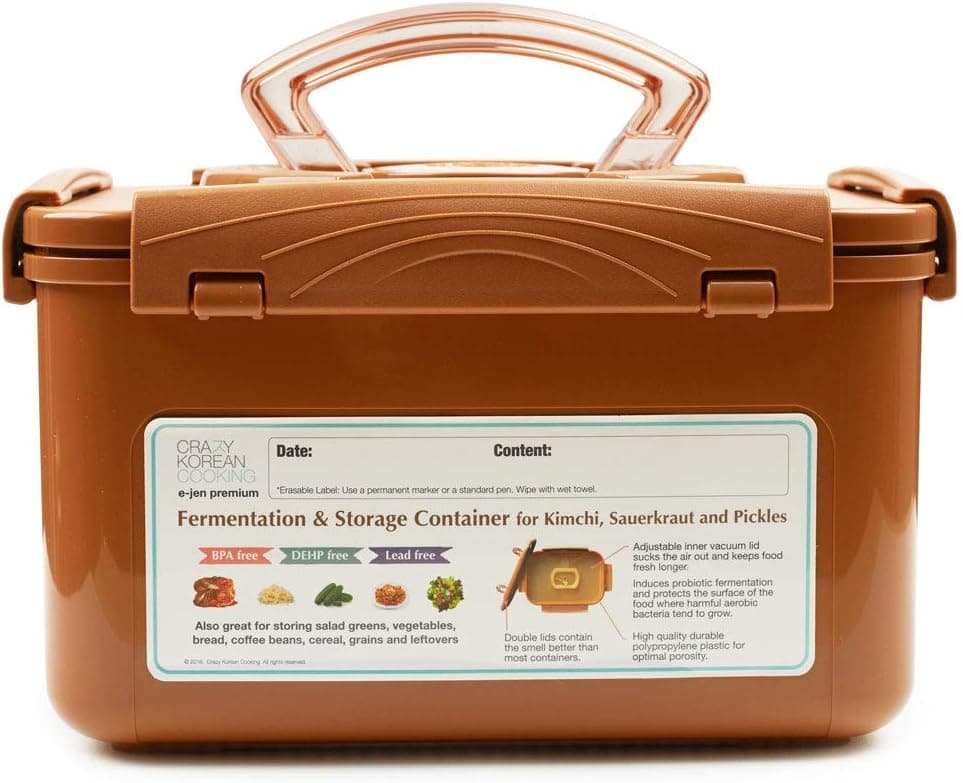
Crazy Korean Cooking's premium kimchi and sauerkraut fermentation and storage container with inner vacuum lid, 1.3 Gal.
Price range: See on Amazon
What we liked
- + 1.3 Gal size fits a full head or two of napa cabbage kimchi
- + Inner vacuum lid pushes out air as the level of kimchi drops
- + Doubles as fridge storage, so kimchi ferments and stores in one box
Trade-offs
- - Plastic container can stain red from gochugaru over time
- - Vented lid needs regular pressing down during active fermentation
What it is built for
This container from Crazy Korean Cooking is sized at 1.3 gallons (5.2 liters), with the brand listing it at roughly 10 inches wide, 7.5 inches deep and 5.8 inches tall. It is built around the traditional Korean onggi idea of a breathing pot, translated into a modern polypropylene container blended with 7 to 10 percent natural clay for porosity. The double-lid system pairs an adjustable inner vacuum lid with an outer lid that snaps down, so the same box carries a batch of kimchi from active fermentation through to long-term fridge storage without a transfer step. At 1.3 gallons it suits a household making kimchi from one to two heads of napa cabbage at a time rather than a single jar's worth or a full seasonal kimjang batch.
The vacuum lid in use
The inner lid is the feature that sets this apart from a plain storage tub. As kimchi is eaten and the level in the container drops, pressing the adjustable disc down removes the extra headspace air, which slows oxidation and helps the surface stay submerged in its own brine. That matters for kimchi and sauerkraut specifically, since exposed cabbage at the top of a batch is where mold and off flavors start. During the first active days of fermentation gas needs to escape past the inner lid, so the fit is designed to vent rather than seal completely airtight, and the brand notes it also works for pickles and Korean jang sauces that benefit from the same reduced-air storage.
Materials and temperature range
The container, inner lid and outer lid are all polypropylene, the gasket is silicone rubber and the carry handle is polycarbonate. The brand states the materials are BPA-free, DEHP-free and lead-free, and rates the container for a wide temperature range from about minus 22 to 284 degrees Fahrenheit, which covers freezer storage on one end and pouring in hot water for cleaning on the other. Polypropylene is a harder, more scratch-resistant plastic than typical storage containers, which suits the repeated pressing action the inner lid needs, though like most light-colored plastics it will slowly take on staining from oily, pigment-heavy ingredients such as Korean red pepper flakes even with regular washing.
Care and cleaning
The manufacturer lists this container as dishwasher safe, and safe in the fridge and freezer. It can also go in the microwave, but only once both lids and the printed label on the front are removed first, since the vacuum mechanism and any adhesive labeling are not meant to be microwaved along with the food. Hand washing shortly after each use, rather than letting kimchi brine sit in the container, will help slow the gochugaru staining that is the main cosmetic downside of the design. The gasket and valve components are small parts worth checking periodically, since a worn seal is what keeps the vacuum lid effective over repeated seasons of use.
Who should buy it
This size is a good match for someone who ferments kimchi or sauerkraut regularly in small household batches and wants one container that handles both the active ferment and the ongoing fridge storage, rather than juggling a crock plus separate storage jars. It is less suited to anyone making a large kimjang-style batch for the whole season, where the 2.2 gallon version in the same line has more headroom, or to a household that only ferments occasionally and would rather use a jar they already own. The tradeoff for the convenience is a lid that needs occasional attention as the level drops and a light plastic body that shows its age cosmetically before it fails functionally.
Frequently asked questions
Does the inner vacuum lid create a true airtight seal?
It reduces headspace air by pressing down as you remove kimchi, but the manufacturer designs it to vent gas during active fermentation rather than seal completely, so it is a low-air environment rather than a true vacuum.
Can I put this container in the microwave?
The brand says yes, but only after removing both the inner and outer lids and the front label first.
Will the container stain from red pepper flakes?
Yes, the light-colored polypropylene can pick up reddish staining from gochugaru over repeated batches, which is cosmetic and does not affect the seal or the fermentation.
How big a batch does the 1.3 gallon size hold?
It is sized for roughly one to two heads of napa cabbage kimchi, according to the brand, making it a household size rather than a bulk seasonal batch.
Prices change often, so check the current price and availability on Amazon.
Check price on AmazonFerment Nest may earn a commission from the link above.