Kawashimaya Natto Starter Powder 3g (0.1oz), To Make 10-30kg of Homemade Natto, Bacillus Subtilis From Soybean Extract Review (2026)
Updated September 14, 2026 · Research-based review
Our verdict
A very economical choice for making natto at home, since one tiny 3 gram packet inoculates up to 30 kilograms of soybeans. The trade-off is that such a small dose is genuinely hard to measure accurately without a proper micro scoop, and natto still demands careful temperature and humidity control.
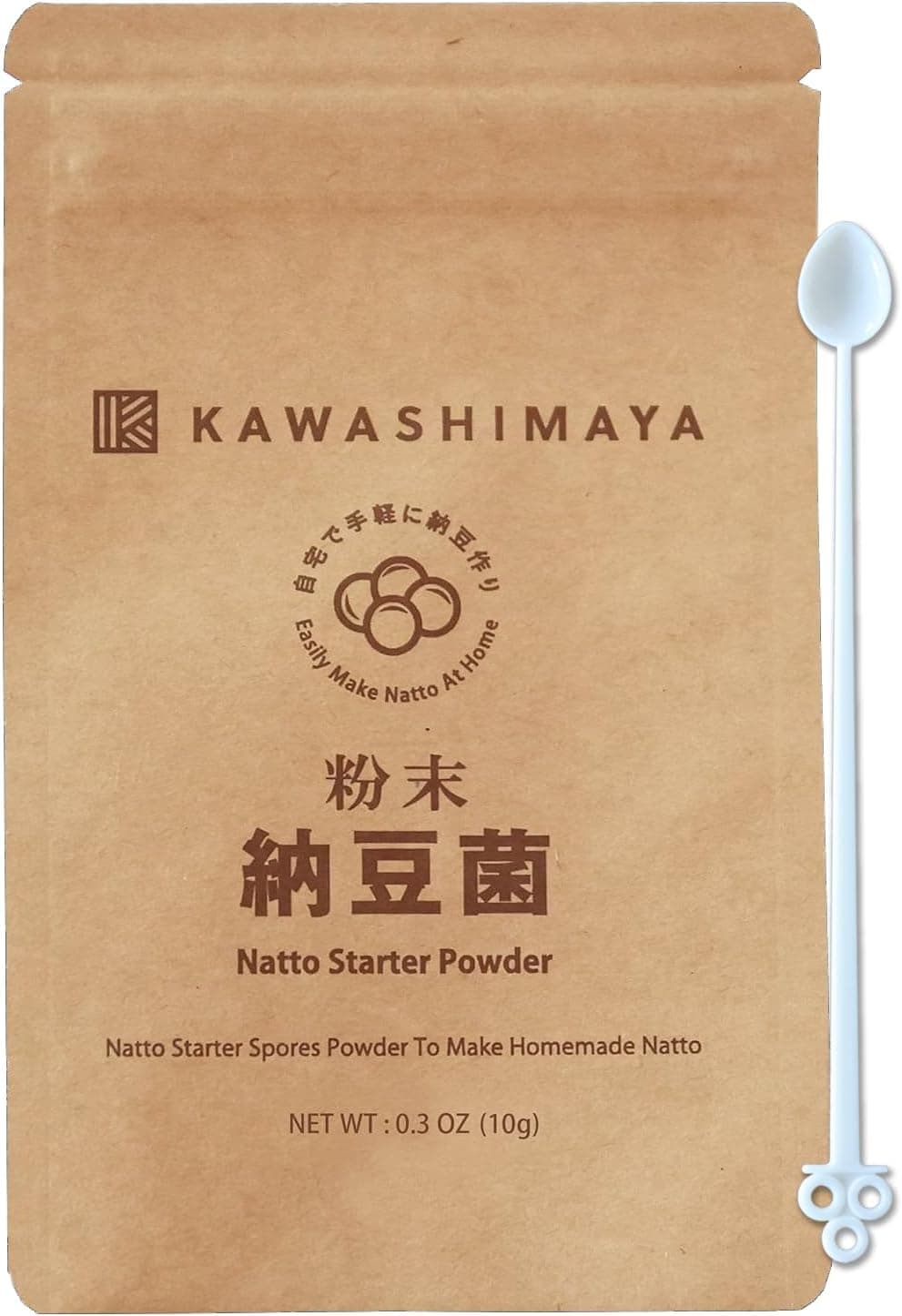
Kawashimaya's natto starter powder, 3g (0.1oz) of Bacillus subtilis to make 10-30kg of homemade natto.
Price range: See on Amazon
What we liked
- + 3g of powder makes 10-30kg of natto, a very high yield
- + Bacillus Subtilis from soybean extract is the classic natto culture
- + Tiny pack is easy to store in the fridge or freezer
Trade-offs
- - Very small doses are hard to measure without a micro scoop
- - Natto needs careful temperature and humidity control
Who this starter is for
Kawashimaya's natto starter powder is aimed at people who want to make natto, the sticky Japanese fermented soybean dish, at home rather than buying it pre-made. The defining feature is yield: a single 3 gram package can produce anywhere from 10 to 30 kilograms of finished natto, which is an enormous amount relative to the tiny packet size. That makes it a strong fit for someone planning to make natto repeatedly over a long period, since one small, easily stored packet lasts a very long time. It is a less convenient fit for someone who wants to measure out a single small batch precisely without any specialized scale or scoop, since dividing 3 grams accurately for a small test batch takes more care than most kitchen tools allow for.
What is actually in the packet
The active ingredient is Bacillus subtilis, specifically the natto strain, cultured from soybean extract with no animal-derived materials, which the maker also markets as alcohol-free and Muslim friendly. This is the same bacterial culture responsible for natto's characteristic sticky, stringy texture and strong fermented aroma, and Kawashimaya describes the culture as having strong fermentative power, intended to give even first-time natto makers a reliable result rather than a weak or inconsistent one. The packet itself is small and lightweight, making it easy to store in the refrigerator or freezer without taking up meaningful space, which suits the long usage life implied by its high yield per gram.
Using such a small dose in practice
The core challenge with this starter is not the fermentation process itself but dosing. Because 3 grams covers such a large batch of soybeans, most home fermenters only need a tiny fraction of the packet for a single household-sized batch, and measuring that fraction accurately without a milligram-capable scale or a proper micro measuring scoop is genuinely difficult. Once soybeans are inoculated, natto fermentation still requires warm, humid conditions held steady for roughly a day, similar in spirit to yogurt or tempeh, and inconsistent temperature can lead to poor stringiness or an off result. Kawashimaya notes the starter is meant to work even for first-timers thanks to its strong fermentative power, which gives some margin for error on dosing but not on temperature control.
Trade-offs and how it compares
The main trade-off against a larger natto starter, such as Kawashimaya's own 10 gram version rated for up to 100 kilograms, is that the 3 gram size is proportionally easier to use up before the culture's potency declines, provided it is stored cold as recommended, with roughly a year of shelf life. Compared with soybean-only listings, like Signature Soy's raw soybeans for natto, this product is purely the starter culture and assumes the buyer sources their own soybeans separately. Against a different starter brand such as Japanese Natto Starter Spores from a competing seller, the choice mostly comes down to trust in the specific producer, since the core process, inoculating cooked soybeans with Bacillus subtilis and holding them warm, is the same regardless of brand.
Verdict
For a committed home natto maker, this starter is excellent value thanks to its extremely high yield relative to its tiny size and long shelf life when kept cold. The catch is precision: buyers should plan on a small measuring scoop or scale to portion out a fraction of the 3 grams for a normal-sized batch, since eyeballing such a small quantity risks under or over-inoculating. Anyone who wants a pre-measured, single-batch product without any dosing math should look for a starter sold in individual single-use portions instead of this bulk-yield packet.
Frequently asked questions
How much natto can one packet make?
The maker states a single 3 gram package can produce roughly 10 to 30 kilograms of finished natto, depending on how it is portioned across batches.
How do I measure such a small amount for one batch?
A small measuring scoop or a scale capable of fine gram measurements is recommended, since a full household batch only needs a small fraction of the 3 gram packet.
How should the starter be stored?
The maker recommends keeping it in a low temperature location or the refrigerator, which supports a shelf life of about a year.
Does the packet include soybeans?
No, this product is the starter culture powder only. Soybeans need to be sourced and cooked separately before inoculation.
Prices change often, so check the current price and availability on Amazon.
Check price on AmazonFerment Nest may earn a commission from the link above.