Professional Salinity Refractometer 0-28% for Food and Brine - High-Precision Salt Tester with ATC for Curing, Pickling and Fermenting, with Hard Case Review (2026)
Updated September 14, 2026 · Research-based review
Our verdict
This 0-28 percent salinity refractometer with a padded hard case suits fermenters who check brine strength often, from curing meats to vegetable ferments. It reads salt content from a couple of drops, though it still needs periodic calibration and prism care, and casual picklers who already weigh salt may not need this precision.
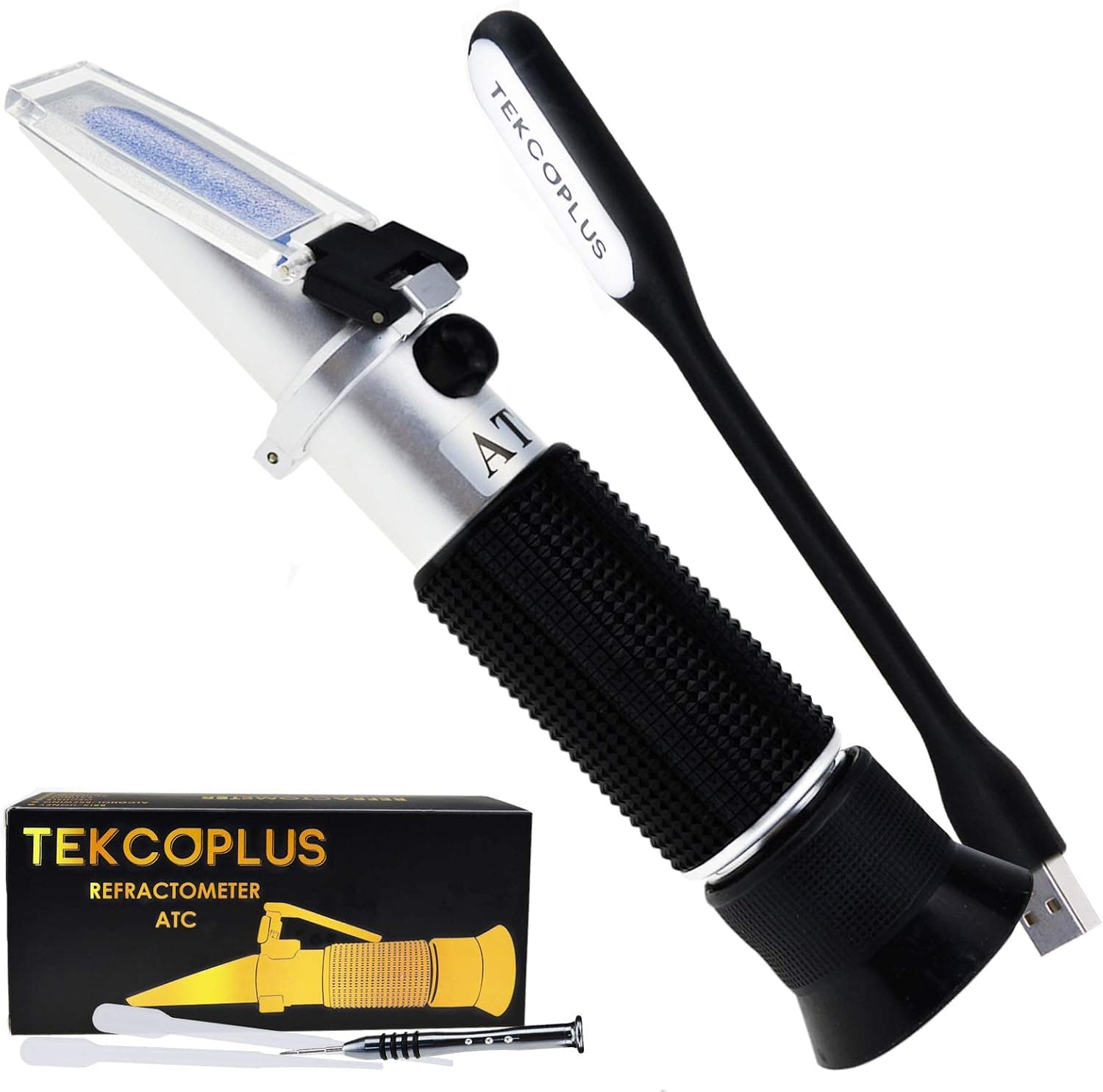
A professional 0-28% salinity refractometer for food and brine with ATC and a hard case, for curing, pickling and fermenting.
Price range: See on Amazon
What we liked
- + Hard Case protects the prism and optics between uses
- + Professional build aims at frequent curing, pickling and fermenting checks
- + ATC keeps salt readings accurate across sample temperatures
Trade-offs
- - More than a casual fermenter needs if you already weigh salt
- - Still requires calibration and careful prism cleaning
Who Reaches For A Refractometer
A salinity refractometer earns its keep with anyone who checks brine strength more than occasionally, whether that means curing bacon and jerky, dialing in a consistent 2 to 5 percent vegetable brine batch after batch, or troubleshooting a ferment that tastes off and might be under or over salted. Rather than trusting a recipe's tablespoon measurements, which vary with salt grain size, a refractometer measures the actual dissolved salt percentage in a sample from just a couple of drops of brine. That makes it most valuable for repeat fermenters who want consistency between crocks, or anyone working with cures where salt percentage affects both flavor and safety margins. A once-a-year pickler who already weighs salt with a kitchen scale and follows a fixed recipe likely will not get enough use out of the precision this tool offers to justify adding it to the toolkit.
What Is In The Kit And How It Reads
This model covers a 0 to 28 percent salinity scale with automatic temperature compensation, so readings stay accurate whether the brine sample is fresh from the fridge or at room temperature, adjusting across a stated range of roughly 50 to 86 degrees Fahrenheit. The body is described as a heavy-duty, non-corrosive aluminum housing around a premium optical prism, which matters in a kitchen environment where brine and humidity would quickly corrode a cheaper metal shell. The kit includes the refractometer itself, two transfer pipettes for placing a sample drop on the prism, a precision calibration screwdriver, a microfiber cleaning cloth, and a padded hard-shell case to keep the optics protected between uses. In practice you place a drop of brine on the daylight plate, close the cover, and look through the eyepiece at a line where the light and dark fields meet, reading the salinity percentage directly off the internal scale rather than waiting on a digital display or battery.
Calibration And Care In Daily Use
Like any optical refractometer, this unit needs occasional calibration to stay trustworthy, typically checked against plain water, which should read at zero percent salinity, and adjusted with the included calibration screwdriver if it drifts. The prism and daylight plate need gentle cleaning after every use with the microfiber cloth, since dried salt crystals or brine residue left on the glass will skew the next reading and can scratch the surface if wiped carelessly. The hard case is a genuine advantage for anyone who stores kitchen tools in a drawer with other hardware, since it keeps the optics from getting knocked around next to jar lids and thermometers. Between the calibration check and the cleaning step, this is a tool that rewards a consistent routine rather than one you can grab and use carelessly.
Where It Fits Against Simpler Tools
Compared with a basic kitchen scale and a printed brine chart, which is how many fermenters get by, a refractometer adds a layer of verification rather than replacing the scale outright, since you still need to mix the brine before checking it. Against other refractometers in the same 0 to 28 percent salinity class sold without a hard case, the padded storage and calibration screwdriver here are the differentiators, since the optical mechanism itself is similar across most models at this price point. If your main goal is simply hitting a target salt percentage by weight, a scale alone gets you there without any optics to maintain. This tool earns its place when you want to double-check a brine after the fact, troubleshoot an inconsistent ferment, or work with cures where salt percentage needs closer verification than a recipe alone provides.
Verdict And Who Should Skip It
For fermenters and curers who check brine strength regularly and want a fast, repeatable way to verify salt percentage without waiting on lab equipment, this refractometer earns our score of 8.4 out of 10, backed by a genuinely useful hard case and calibration kit. It is a specialist's tool, not a beginner's first purchase. Skip it if you are new to fermenting and still learning basic ratios with a kitchen scale, since the scale will teach you more about brine strength per dollar spent at that stage. It also is not necessary if your ferments are simple, consistent, and already turning out well without any measurement beyond a trusted recipe and a scale.
Frequently asked questions
What salinity range does this refractometer measure?
It covers a 0 to 28 percent salinity scale, which spans the range used for vegetable brines, meat curing solutions, and most home fermentation and pickling needs.
Does it need calibration, and how often?
Yes, like any optical refractometer it should be checked periodically against plain water, which should read zero percent, and adjusted with the included calibration screwdriver if it has drifted.
What comes in the box?
The kit includes the refractometer, two transfer pipettes, a precision calibration screwdriver, a microfiber cleaning cloth, and a padded hard-shell case for storage.
Is a refractometer necessary if I already weigh my salt?
Not necessarily. If you follow a consistent recipe and weigh salt by percentage already, a refractometer mainly adds verification rather than being essential, and is more useful for frequent curing or troubleshooting inconsistent brines.
Prices change often, so check the current price and availability on Amazon.
Check price on AmazonFerment Nest may earn a commission from the link above.