Apera Instruments Premium-Series PH60S Food pH Pocket Tester Kit, Swiss Spear pH Electrode, 0.01 pH Accuracy Review (2026)
Updated September 14, 2026 · Research-based review
Our verdict
The Apera PH60S suits a serious home fermenter or small food business that needs accurate pH readings directly in solid or semi-solid foods like cheese, sausage or dough. The Swiss spear electrode and lab-grade accuracy justify the cost for repeat use, though it is priced well above hobby pH pens.
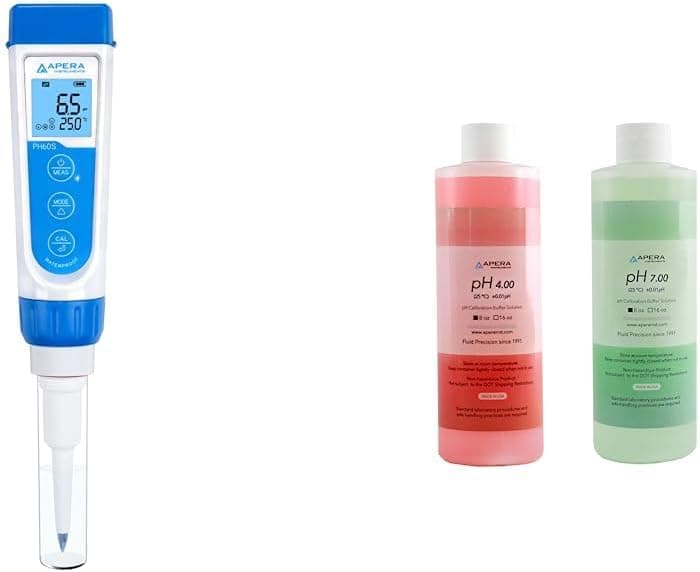
Apera Instruments' Premium-Series PH60S food pH pocket tester kit with Swiss spear electrode and 0.01 pH accuracy.
Price range: See on Amazon
What we liked
- + Swiss Spear pH Electrode pierces cheese, meat and firm vegetables
- + 0.01 pH Accuracy suits careful fermenters and small food businesses
- + Apera Instruments is a lab equipment brand, not a generic import
Trade-offs
- - Premium kit costs far more than hobby-grade pH pens
- - Spear electrode is delicate and must be kept moist in storage
Who needs a spear-electrode pH meter
This tester is built for anyone who needs to measure pH directly inside solid or semi-solid food, such as a fermenter checking cheese, cured meat, sourdough, kimchi or thick sauces, where a standard liquid pH probe cannot get an accurate reading without first making a slurry. It suits a careful home fermenter tracking pH for food safety in low-acid ferments, or a small food business that needs repeatable, lab-grade readings for consistency between batches. Apera Instruments makes laboratory measurement equipment rather than consumer kitchen gadgets, and the PH60S reflects that background in its accuracy and calibration features. A casual fermenter who only occasionally checks pH in liquid brine, and does not need to test solid foods directly, will likely find this kit more capability, and more cost, than they need.
What the spear electrode and specs deliver
The PH60S uses a Swiss LabSen sensor with a spear-tip glass membrane designed to pierce directly into cheese, meat, sushi rice, dough or soil without needing to dilute the sample into a liquid slurry first, which is the main advantage over a standard flat or bulb-tip pH probe. It measures across a -2.00 to 16.00 pH range with plus or minus 0.01 pH accuracy, backed by automatic temperature compensation from 0 to 50 degrees Celsius and up to three-point automatic calibration with buffer recognition. The kit ships with an AI1113 pH calibration buffer solution set to support that calibration process out of the box. The meter carries an IP67 waterproof and dustproof rating and a battery life rated up to 2000 hours, with a low-battery warning and auto shutdown to help preserve the electrode and battery between uses.
Living with it through regular testing
In practice, the spear tip is pushed directly into the food being tested, whether that is a wheel of cheese, a piece of dough, or a batch of fermenting kimchi, and the large backlit LCD displays temperature and pH together so a reading can be taken without needing a second thermometer. Calibration should be done regularly using the included buffer solution to keep the automatic compensation accurate, and the electrode should be stored properly between uses, since the glass membrane on any spear-tip probe is more delicate than a standard liquid probe and needs to stay moist rather than drying out. The IP67 rating helps with the inevitable splashes and spills that come with kitchen or fermentation work, though it is not a substitute for gentle handling of the probe tip itself, which can crack if knocked against a hard surface.
How it compares with other pH meters for fermenting
Against simpler digital pH meters marketed for sourdough and fermentation that also claim 0.01 pH accuracy, the PH60S differentiates itself with the Swiss LabSen sensor technology, up to three-point calibration, and an IP67 rating that some rival meters do not match. Compared with meters that use a straight probe rather than a spear tip, this design is better suited to testing thick or solid foods directly rather than requiring a liquid sample. The trade-off is price: this premium kit costs meaningfully more than hobby-grade pH pens aimed at casual sourdough bakers, reflecting its lab-instrument background, two-year meter warranty and six-month probe warranty, both of which are longer than what many budget testers offer.
Verdict and who should choose a cheaper meter
This is the right pick for anyone who regularly tests pH directly in cheese, cured meat, dough or thick ferments and wants accuracy and calibration features closer to lab equipment than a hobby gadget. The spear electrode, wide pH range and IP67 rating make it a durable, precise tool for repeat use, backed by a two-year instrument warranty and six-month probe warranty. A casual home fermenter who only checks pH occasionally in liquid brine, or who is working with a tight budget, will likely get sufficient accuracy from a simpler digital pH pen at a fraction of the cost, since this premium kit is built for frequent, precise solid-food testing rather than occasional use.
Frequently asked questions
Can this meter test pH inside solid foods like cheese?
Yes, the Swiss spear electrode is designed to pierce directly into cheese, meat, dough and other solid or semi-solid foods without needing a liquid slurry.
What is the warranty on this pH meter?
Apera backs the instrument with a two-year warranty and the probe with a six-month warranty from the date of delivery.
Does it need calibration before use?
Yes, it supports up to three-point automatic calibration with buffer recognition, and a calibration buffer solution kit is included.
Is the meter waterproof?
It carries an IP67 rating for waterproof and dustproof protection, though the spear electrode tip still needs gentle handling.
Prices change often, so check the current price and availability on Amazon.
Check price on AmazonFerment Nest may earn a commission from the link above.