Morton All Natural Canning & Pickling Salt, 4 lb Box Review (2026)
Updated September 14, 2026 · Research-based review
Our verdict
Morton's canning and pickling salt has no iodine or anti-caking additives, so brines stay clear instead of clouding, a real plus for fermented pickles and kraut. The 4 lb box restocks easily for a fermenting season, though it clumps in humid kitchens unless stored dry and should be weighed, not measured by volume.
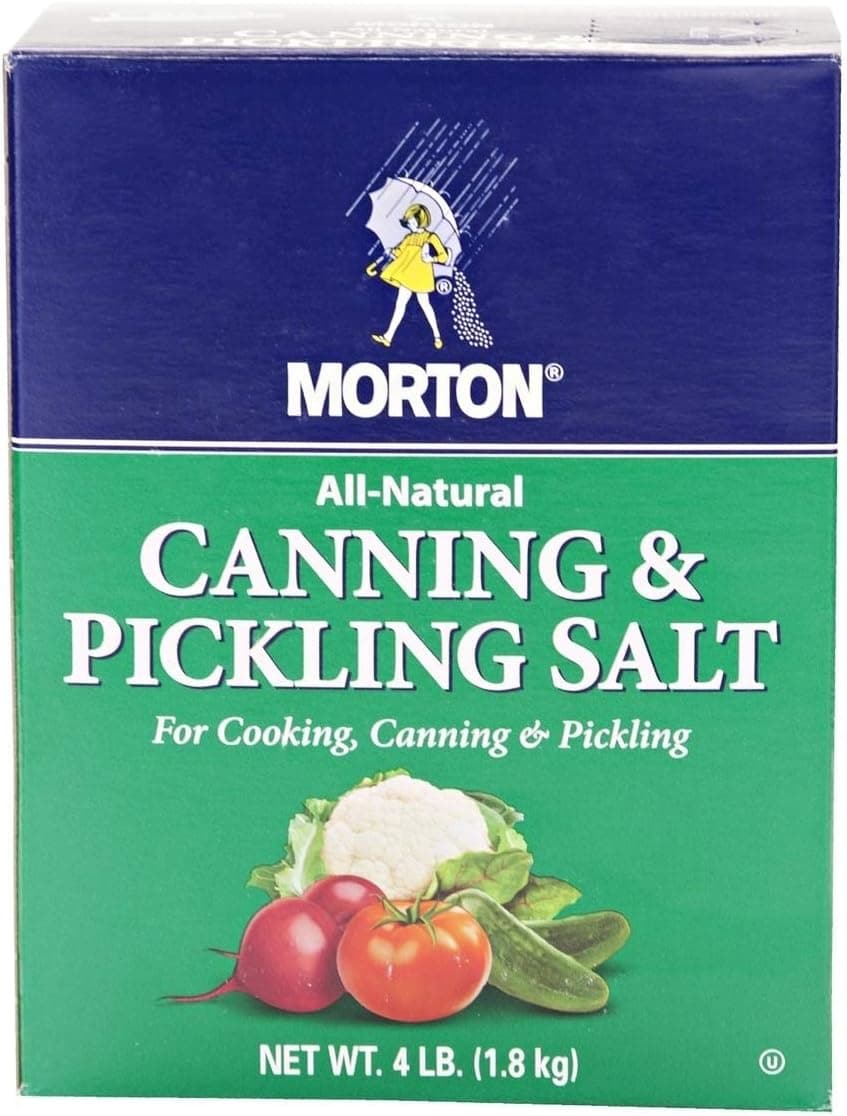
Morton's all natural canning and pickling salt in a 4 lb box, a pure, additive-free salt for brines and kraut.
Price range: See on Amazon
What we liked
- + Morton is a trusted salt brand that is easy to find again
- + All Natural pickling salt has no iodine or anti-caking agents
- + 4 lb box covers a full season of pickling and fermenting
Trade-offs
- - Cardboard box can clump in humid kitchens unless stored dry
- - Fine grains are denser by volume, so weigh salt for accuracy
Who This Salt Is For
Anyone making fermented pickles, sauerkraut, kimchi, or other brined vegetables needs a salt that dissolves cleanly and will not interfere with the fermentation itself, and that rules out iodized table salt and salts with anti-caking agents, both of which can cloud brine or, in the case of iodine, potentially slow fermentation. Morton's canning and pickling salt is formulated specifically to avoid both issues, making it a safe default choice for beginners who just want a reliable salt without researching which brands to avoid. It also suits anyone who cans or pickles seasonally and wants a single trusted salt for both fresh vegetable ferments and shelf-stable canned pickles, since the same additive-free profile works for both processes.
What Makes This Salt Different From Table Salt
The ingredient list is simply salt, with no added iodine and no anti-caking agents, which are the two additives most likely to cause problems in a ferment or canning brine. Iodized salt can cause fermented brine to discolor or take on an off taste over time, and anti-caking agents can make brine look cloudy or slightly hazy, which matters both for appearance and, in a fermentation context, for tracking whether cloudiness is from the salt or from healthy fermentation activity you want to watch for. This 4 lb box is sold as an all natural product built specifically for canning, pickling, cooking, baking, marinades, and brining, so it works as a general kitchen salt as well as a dedicated fermentation ingredient, without needing a separate salt just for ferments.
Using And Storing It
In practice, this salt measures and dissolves easily into brine, and because it lacks anti-caking agents it can clump over time if the box is left open in a humid kitchen, which is a trade-off for the additive-free formula rather than a defect. Keeping the box sealed or transferring the salt to an airtight container after opening avoids most clumping issues. Because pickling salt grains are finer and denser by volume than kosher salt or other coarse salts, measuring by volume with a tablespoon will not give a consistent result between salt types, so weighing salt on a kitchen scale is the more reliable approach for anyone following a percentage-based brine recipe rather than a recipe written specifically for this salt's grain size.
How It Compares To Other Fermentation Salts
Against Diamond Crystal kosher salt, another additive-free option often used for fermenting, the main practical difference is grain size and how each measures by volume, since kosher salt crystals are larger and less dense, meaning a tablespoon of one is not equal in weight to a tablespoon of the other. Morton's pickling salt is finer and dissolves a little faster, which some fermenters prefer for quickly building a clear brine. Compared with Morton's own bulk bagged version sold under a similar name, the product itself is the same additive-free formula, just packaged differently, so the choice between the box and the bag mostly comes down to which format is easier to store and reseal in your kitchen. Either way, weighing salt rather than relying on volume measurements is the more reliable habit across brands.
Verdict And When To Choose Something Else
For anyone who wants a dependable, additive-free salt for fermenting and canning without hunting through specialty brands, this earns our score of 8.3 out of 10 as a trusted, widely available option that does exactly what a fermentation salt needs to do. It is not exciting, but it is exactly right for the job. Consider a coarser kosher or sea salt instead if you prefer a specific mineral flavor profile in your ferments, since this pickling salt is a plain, neutral option by design. If you ferment in very large volumes regularly, a bulk bag format may be more economical per pound than repeatedly buying the smaller box.
Frequently asked questions
Does this salt contain iodine or anti-caking agents?
No, it is formulated as an all natural canning and pickling salt with no iodine and no anti-caking agents, which helps keep fermentation brine clear.
Can I substitute this for table salt in a brine recipe by the tablespoon?
It is safer to weigh salt by grams for a percentage-based brine recipe, since pickling salt is finer and denser by volume than table salt or kosher salt, so tablespoon measurements are not interchangeable.
Why does the salt clump in the box sometimes?
Because it has no anti-caking agent, it can absorb moisture and clump in humid conditions, so keeping the box sealed or moving the salt to an airtight container helps prevent this.
Is this salt suitable for both fermenting and traditional canning?
Yes, it is marketed for canning, pickling, cooking, baking, marinades, and brining, so the same box works across fresh ferments and shelf-stable canned pickles.
Prices change often, so check the current price and availability on Amazon.
Check price on AmazonFerment Nest may earn a commission from the link above.