AUTOUTLET 0-28% Salinity Tester ATC Salinity Refractometer for Food Industry, Pickle, Soy Sauce, Brine and More Review (2026)
Updated September 20, 2026 · Research-based review
Our verdict
AUTOUTLET's version covers the same brine-checking job as other 0-28 percent refractometers, with a stated 0.2 percent accuracy and pipettes included for sampling. It is a reasonable pick for pickle and soy sauce brine, though optical readings still take a little practice.
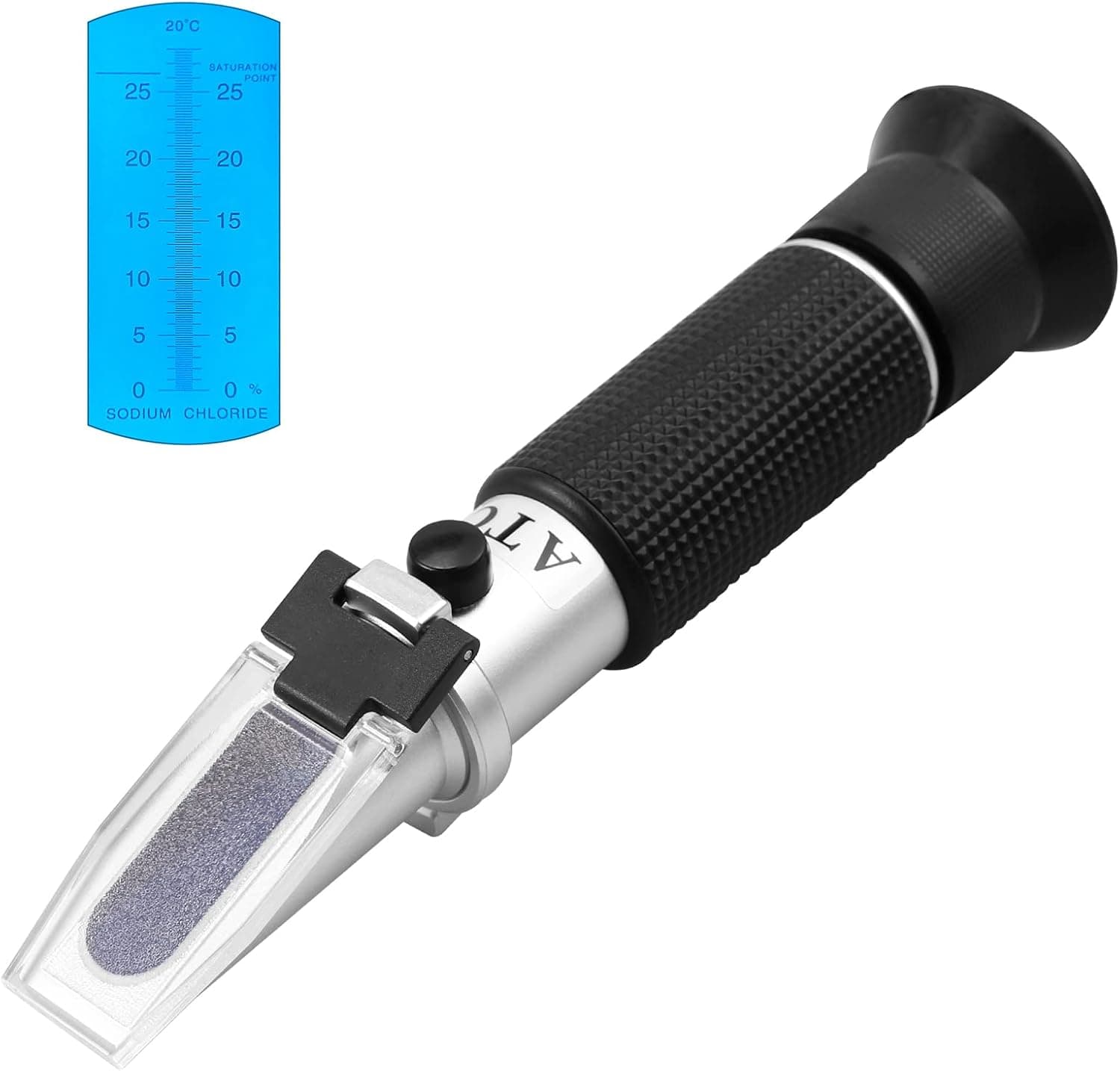
AUTOUTLET's 0-28% ATC salinity tester refractometer for food industry use, pickles, soy sauce and brine.
Price range: See on Amazon
What we liked
- + ATC compensates for temperature so warm brine still reads correctly
- + Listed for soy sauce and pickles, so it fits food fermentation work
- + 0-28% scale covers typical vegetable and curing brines
Trade-offs
- - Optical refractometers need careful cleaning of the prism after each use
- - Cloudy brines with sediment can make the reading line fuzzy
Core specs and what it targets
This refractometer reads salinity on a 0 to 28 percent scale with a stated accuracy of about 0.2 percent, using automatic temperature compensation (ATC) so readings stay consistent as brine warms or cools. It is marketed toward food industry testing, including pickles, soy sauce and general brine work, putting it in the same category as other curing and pickling refractometers rather than aquarium or open-seawater instruments. The listing includes pipettes for placing sample drops on the prism, which helps keep sample size consistent between readings, and consistent sample size is one of the small details that keeps repeated checks comparable to each other over time.
How the reading works
Like other optical salinity refractometers, this one requires a drop of brine on the prism, then a look through the eyepiece toward a light source to see where a line crosses the salinity scale. There is a learning curve to reading the line cleanly, especially with a hazy or heavily used brine, but the technique becomes quick with practice after the first few samples. ATC handles the temperature side of the equation automatically, so you do not need to wait for a sample to reach room temperature before testing it, which speeds up checks mid-ferment when time matters and the brine is still active.
Fit for pickle and soy sauce work
Because the listing calls out pickles and soy sauce specifically, this suits home fermenters checking brine strength for cucumbers, cabbage or other vegetables, as well as anyone monitoring salt concentration in a soy sauce or similar fermented condiment project. The 0-28 percent range comfortably covers typical vegetable fermentation brines, which usually sit well under the top of that scale, leaving headroom for stronger curing brines too. It functions as a check against a recipe's target salinity rather than a tool for precise scientific work, which is exactly the level of precision most home batches of kraut or kimchi actually need day to day.
Upkeep and cleaning
As with any prism-based refractometer, the optical surface needs cleaning after each use since dried salt residue or sediment from a cloudy brine can distort future readings or make the scale line harder to see. There is no battery involved since it is a purely optical tool, which means no charging routine, but it does mean storing it somewhere dry and protected between uses so the prism and eyepiece stay in good condition. Basic care mostly comes down to wiping it down with a soft cloth after each session and keeping it out of a damp drawer where condensation could reach the lens over time.
Who this is for
This model suits home fermenters and small-batch food makers who want a straightforward way to confirm brine salinity for pickles, kimchi or soy sauce without buying a lab-grade instrument. The included pipettes are a small but useful convenience for keeping sample application consistent test to test. Buyers who want a digital salinity readout instead of reading an optical scale, or who need documented calibration traceability for commercial work, would be better served by a different class of meter entirely. For a home kitchen where the goal is simply hitting a recipe's target salt percentage, this covers the need without extra complexity or cost.
Frequently asked questions
What is the accuracy of this salinity refractometer?
It is stated at about 0.2 percent accuracy across its 0 to 28 percent salinity range.
Does it compensate for temperature automatically?
Yes, it includes automatic temperature compensation, so you do not need to wait for a brine sample to cool to room temperature.
What is included with the refractometer?
The listing includes pipettes for sampling brine onto the prism along with the refractometer itself.
Is this suited to soy sauce and pickle brine?
Yes, it is marketed specifically for food industry use including pickles, soy sauce and general brine testing.
Prices change often, so check the current price and availability on Amazon.
Check price on AmazonFerment Nest may earn a commission from the link above.