0-28% Salinity Refractometer ATC, Sodium Chloride (NaCl) Salt Level Meter Tester for Brine, Seawater, Pickle, Soy Sauce, 0.2% Accuracy Review (2026)
Updated September 20, 2026 · Research-based review
Our verdict
Another solid entry in the 0-28 percent optical refractometer category, built for brine, seawater and pickle or soy sauce testing with stated 0.2 percent accuracy. It does the core job well but will not match dedicated digital salt meters for fine precision.
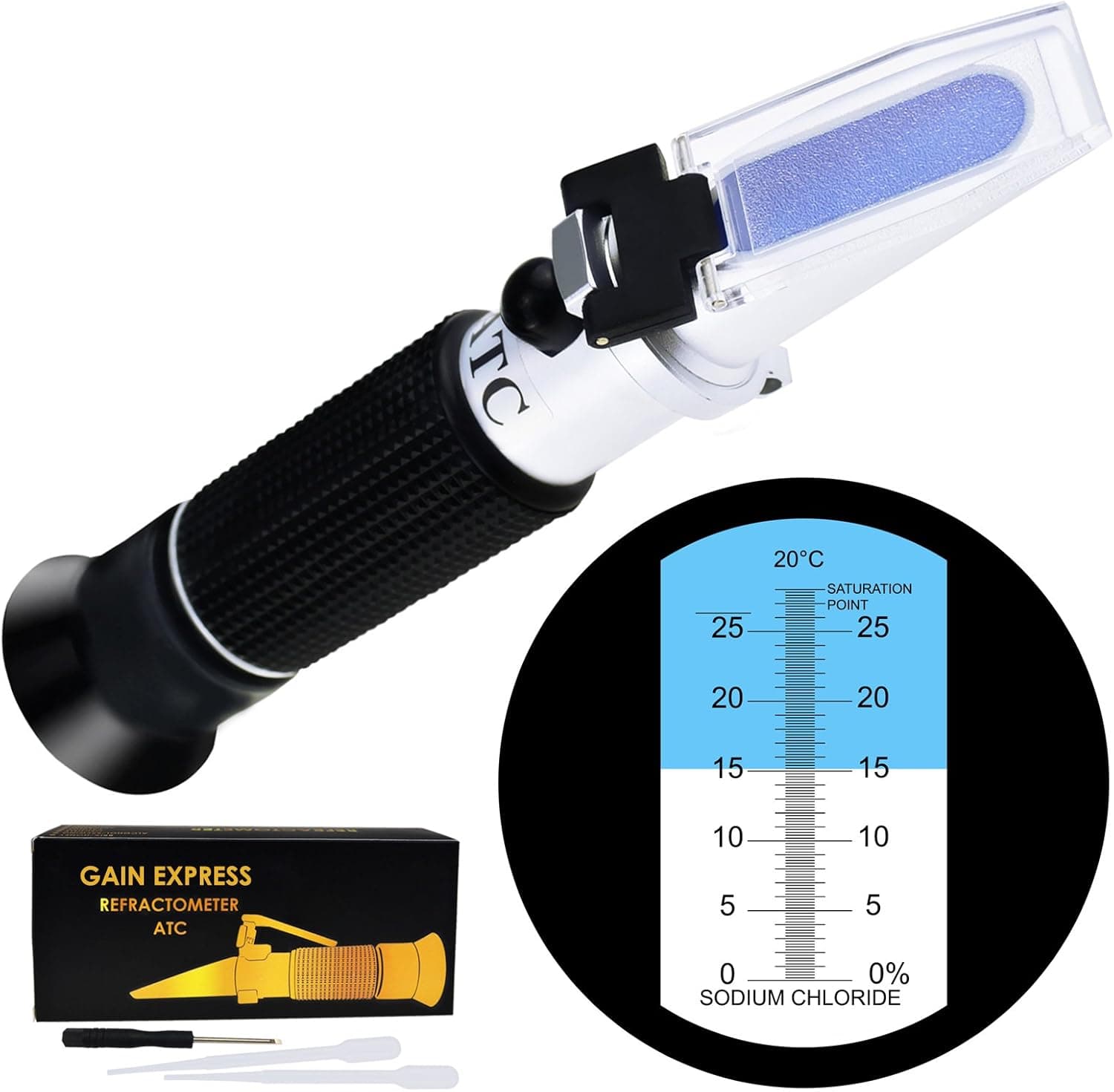
A 0-28% ATC salinity refractometer and sodium chloride (NaCl) salt level meter with 0.2% accuracy for brine and pickles.
Price range: See on Amazon
What we liked
- + 0.2% Accuracy is stated, so you know how precise brine checks are
- + ATC keeps readings stable across kitchen temperatures
- + Handles brine, pickle liquid and soy sauce testing
Trade-offs
- - Stated accuracy is coarser than digital salt meters
- - Small sample drops must be placed carefully to avoid air bubbles
What the refractometer covers
This is an ATC-equipped salinity refractometer with a 0 to 28 percent measuring range and a stated accuracy of about 0.2 percent, targeting sodium chloride concentration in brine, seawater, pickle liquid and soy sauce. Automatic temperature compensation means the device adjusts for sample temperature on its own, so a brine straight out of the refrigerator and one at room temperature should read close to the same salinity without extra waiting. The scale is printed for direct salinity percentage rather than a generic specific-gravity number, which keeps the readout easy to compare against a recipe target.
Calibration and adjustment
Like comparable optical refractometers, this one is calibrated by placing distilled water on the prism and adjusting a small screw until the scale reads zero, a step worth repeating periodically to keep readings trustworthy. The focus ring can also be adjusted for individual eyesight, which affects how sharp the boundary line appears when reading a sample. Skipping calibration is the most common reason these instruments drift out of accuracy over time, so it is worth building into a regular routine rather than treating it as a one-time setup step. Keeping a small bottle of distilled water next to the tool makes this check quick enough to do before every batch, and it takes only a minute once the habit is established.
Reading a sample in practice
To use it, a small drop of brine goes on the prism, the cover flips down to spread it evenly, and you look through the eyepiece toward a light source to find where the boundary line crosses the salinity scale. Air bubbles in the sample drop can blur the line, so placing the drop carefully and avoiding excess liquid helps get a clean read. Cloudy or sediment-heavy brines, common with some vegetable ferments, can also make the line less sharp, so straining a sample through a fine mesh or cloth before testing tends to give a noticeably clearer result on the scale.
Where the stated accuracy sits
The 0.2 percent accuracy figure here is coarser than what a dedicated digital salinity meter typically offers, which matters if you need to distinguish very close brine percentages for a demanding recipe. For most home fermentation and pickling purposes, though, this level of precision is enough to confirm a brine is in the right ballpark, since small variations rarely make or break a batch of pickles or kraut. Buyers doing more exacting curing work, where salt percentage is tied closely to food safety timing, may want a more precise instrument instead, and should weigh that against the cost difference before deciding.
Who should buy it
This suits home fermenters, picklers and small-batch cooks who want an affordable way to check brine or soy sauce salinity without investing in a digital salt meter. It handles the common range of vegetable fermentation and curing brines comfortably within its 0 to 28 percent scale. Anyone who dislikes reading an optical scale line, or who needs tighter accuracy for professional or highly precise curing work, would likely be better served by a digital alternative rather than this style of refractometer. For most home kitchens, though, this covers brine checking without adding much cost or complexity to the process.
Frequently asked questions
What does the 0.2 percent accuracy rating mean here?
It means readings on the 0-28 percent salinity scale are accurate to within about 0.2 percentage points, which suits general brine checking rather than lab-grade precision.
Does this refractometer need calibrating?
Yes, it should be zeroed with distilled water on the prism periodically to keep readings accurate over time.
Can it be used for seawater as well as brine?
The listing covers brine, seawater, pickle liquid and soy sauce, so it is built for a range of salty liquids rather than one narrow use.
Why does the reading look blurry sometimes?
Air bubbles in the sample drop or a cloudy, sediment-heavy brine can blur the boundary line, so straining a sample first usually helps.
Prices change often, so check the current price and availability on Amazon.
Check price on AmazonFerment Nest may earn a commission from the link above.