Tilt Wireless Black Hydrometer and Thermometer for Precision Monitoring of Fermentation of Beer, Wine, Cider, Mead Review (2026)
Updated September 20, 2026 · Research-based review
Our verdict
Tilt turns gravity and temperature tracking into a wireless, app-based process, which is genuinely useful for beer, wine, cider and mead makers who want to watch fermentation without opening the vessel. The cost is real, and it is more tool than a basic vegetable fermenter needs.
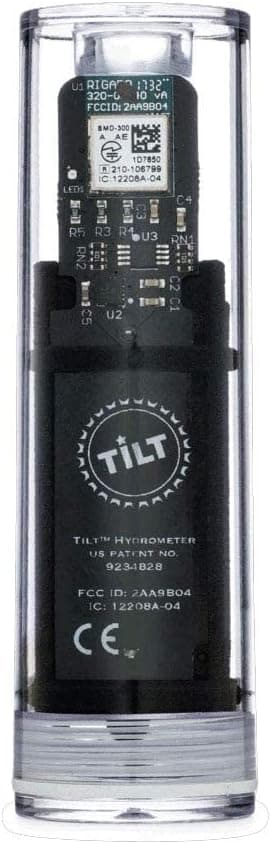
Tilt's black wireless hydrometer and thermometer for precision monitoring of beer, wine, cider and mead fermentation.
Price range: See on Amazon
What we liked
- + Floats inside the brew and sends gravity and temperature readings wirelessly
- + Tracks fermentation progress without opening the vessel to take samples
- + Precision monitoring suits serious mead, cider and beer makers
Trade-offs
- - Expensive compared with strip thermometers for simple vegetable ferments
- - Needs a phone or device nearby to receive readings
How Tilt tracks fermentation
The Tilt is a hydrometer and thermometer combined into a single sealed, food-safe floating device that sits inside the fermenting liquid and transmits specific gravity and temperature readings wirelessly to a phone app over Bluetooth. Because it floats inside the vessel itself, there is no need to pull a sample out to check gravity, which avoids both the hassle and the small risk of introducing contamination each time you would otherwise open the fermenter. Readings are logged over time, letting you see a full fermentation curve rather than just occasional snapshots, which makes it easier to notice a stall or an unusually fast start early on.
Range and accuracy
Tilt is factory calibrated across a specific gravity range of about 0.9900 to 1.1200, and it can be user-calibrated up to 1.2000 for stronger brews, with a resolution of 0.0001 and stated accuracy of about plus or minus 0.002 within its calibrated range. Temperature accuracy is stated at about plus or minus 1 degree Fahrenheit. That level of precision is aimed squarely at brewers tracking beer, wine, cider or mead fermentation, where small shifts in gravity over days indicate how actively yeast is converting sugar to alcohol, and catching those shifts early can influence decisions like when to rack or bottle a finished batch.
App and connectivity
The device pairs with the free Tilt app on iOS and Android for live readings and logged history, and it is also compatible with Tilt Pi for a Raspberry Pi setup or third-party Bluetooth Low Energy receivers that support the Tilt data format, giving more advanced users flexibility in how they log data. Bluetooth range can be limited by stainless steel fermenters, since metal walls and lids interfere with the signal more than plastic or glass vessels do, something worth considering if your regular setup is an all-stainless conical fermenter rather than a plastic bucket or glass carboy sitting in an open area.
Power and day to day use
Tilt runs on a single user-replaceable CR123A lithium battery rated for roughly one to two years depending on how often it is used, so it does not need daily charging. Because it is a sealed floating unit, cleaning between batches is simple wipe-down work rather than anything involved, with no crevices for residue to collect in the way a traditional glass hydrometer can pick up film over time. For long fermentations, being able to check gravity trends from a phone without lifting a lid is the main convenience, especially for temperature-sensitive styles where minimizing air exposure and heat loss really matters.
Who should buy it
This suits beer, wine, cider and mead makers who ferment regularly enough to benefit from automated, hands-off gravity and temperature tracking, and who already use or are willing to use a smartphone app to monitor a batch. It is a more specialized, higher-cost tool than most vegetable fermentation needs, so buyers whose main projects are sauerkraut, kimchi or pickles will not get much use from it. For serious homebrewers tracking multiple batches, the ability to watch fermentation progress remotely is a meaningful upgrade over manual hydrometer samples, and it can help catch a stalled fermentation earlier than periodic manual checks would.
Frequently asked questions
What is Tilt's specific gravity range and accuracy?
It is factory calibrated from about 0.9900 to 1.1200, user-calibratable up to 1.2000, with accuracy of about plus or minus 0.002 within range.
How does Tilt send its readings?
It transmits gravity and temperature wirelessly over Bluetooth to the free Tilt app, or to Tilt Pi and compatible third-party receivers.
What battery does it use and how long does it last?
It uses one user-replaceable CR123A lithium battery, rated for roughly one to two years depending on usage.
Does Bluetooth range change with different fermenters?
Yes, stainless steel fermenters can limit Bluetooth range more than plastic or glass vessels because metal interferes with the signal.
Prices change often, so check the current price and availability on Amazon.
Check price on AmazonFerment Nest may earn a commission from the link above.