Salinity Refractometer 0-28% for Measuring Sodium Chloride Content in Brine, Seawater and Industry, NaCl Salinometer for Pickles and Curing Foods Review (2026)
Updated September 20, 2026 · Research-based review
Our verdict
A straightforward optical tool for checking brine strength before or during a ferment, useful once you learn to calibrate and read it. It is aimed at curing and pickling brine rather than open seawater or aquarium work, so match it to that use.
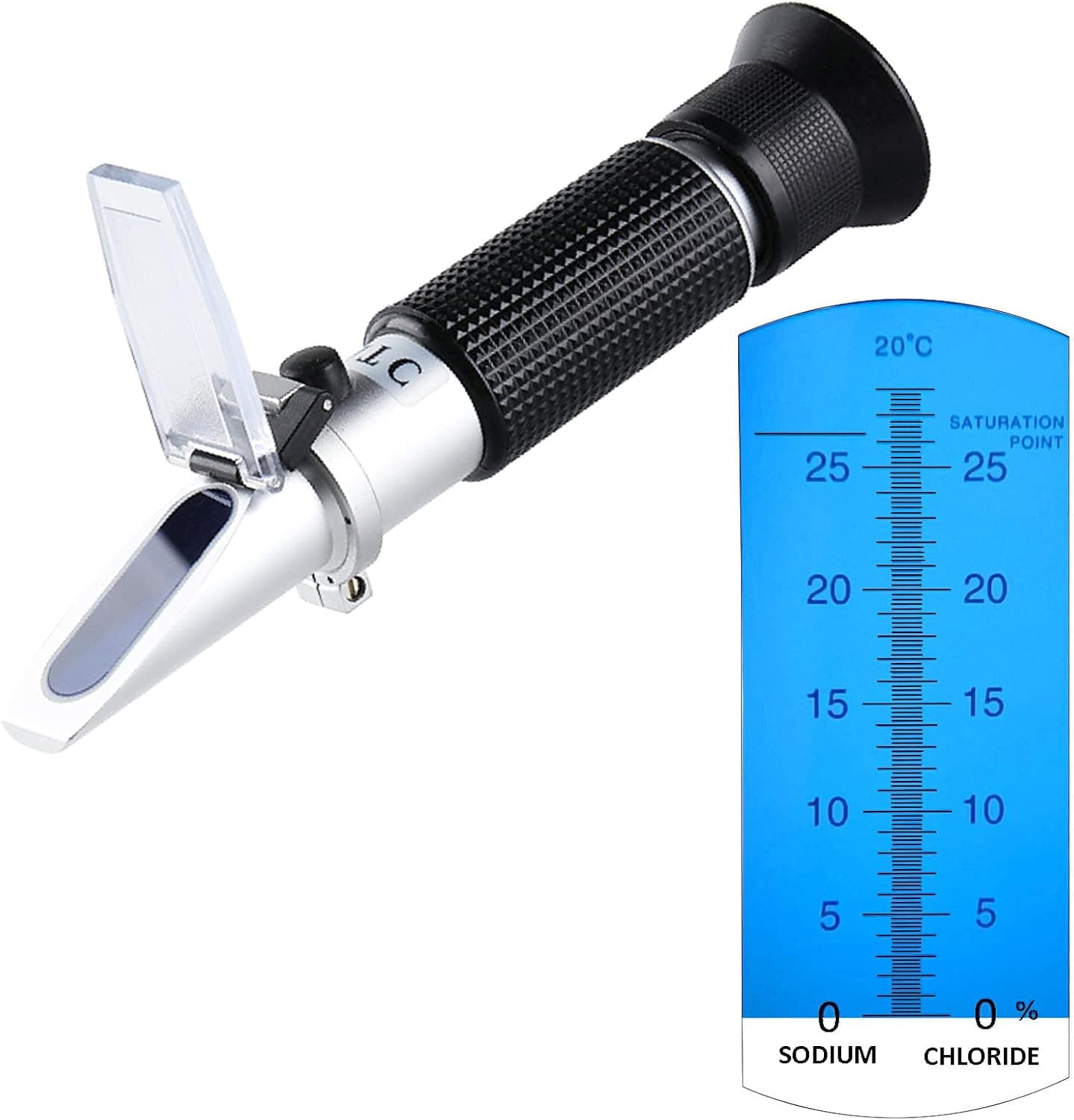
A 0-28% salinity refractometer for measuring sodium chloride in brine, seawater and industry, a salinometer for pickles and curing.
Price range: See on Amazon
What we liked
- + Reads brine salt percentage directly, so there is no math after mixing
- + 0-28% range covers light pickle brines up to strong curing brines
- + Useful for checking the salt level of a brine you have already made
Trade-offs
- - Needs calibration with distilled water before accurate use
- - Readings through the eyepiece take practice to line up clearly
What it measures and how
This is an optical refractometer that reads salinity directly on a 0 to 28 percent scale, with 0.2 percent divisions, by bending light through a drop of brine placed on the prism. You look through the eyepiece toward a light source and read where a line crosses the printed scale, which avoids any math after mixing a brine. The listing is aimed specifically at sodium chloride content in brine used for curing and pickling rather than general seawater testing, so the scale and calibration point are set up for that concentrated brine range, and it is explicitly not intended for aquarium or open ocean salinity monitoring.
Calibration and setup
Before trusting a reading, the refractometer needs to be zeroed using distilled water on the prism, since tap water minerals can shift the baseline. The unit includes automatic temperature compensation across a 10 to 30 degree Celsius range, which corrects for the fact that a warm brine and a cold one refract light slightly differently. The included kit adds a plastic organizer box, a dropper for placing the sample, a small screwdriver for adjusting calibration, a printed manual and a cleaning cloth, which covers what is needed to get started without buying extras.
Using it for pickles and curing brine
In practice, this tool answers a simple question: is this brine as salty as the recipe calls for. A few drops on the prism after mixing gives a percentage reading you can compare against a target, which is useful for consistent pickles, sauerkraut brine or curing solutions where salt level affects both safety and texture. It is a hand tool rather than a digital display, so getting a clean read of the scale line takes a bit of practice, especially in low light or with a cloudy brine. Checking a fresh batch of brine right after mixing, before it has had a chance to interact with vegetables, tends to give the cleanest reading.
Build and handling
The body is described as aluminum construction that resists staining and corrosion, which matters for a tool that regularly contacts salty liquid. Because it is an optical instrument rather than an electronic one, there is no battery to replace and no digital drift to worry about, but the eyepiece and prism do need to be kept clean and dry between uses to avoid residue affecting future readings. The compact size makes it easy to store in a drawer alongside other fermentation tools rather than needing dedicated space, and the included organizer case helps keep the dropper, screwdriver and cloth together instead of scattered around the kitchen.
Who should buy it
This suits home fermenters and picklers who want to verify brine strength rather than eyeball a salt-to-water ratio, particularly for recipes where a specific percentage matters for safety or texture. It is a better match for curing and pickling brine than for open water or aquarium salinity work, since the scale and calibration are set up for that narrower use. Buyers who prefer a digital number over reading an optical scale line, or who need certified accuracy for lab-style use, may want a different instrument. Anyone making the same brine recipe repeatedly will likely find the most value, since it turns a guess into a repeatable check each time.
Frequently asked questions
What salinity range does this refractometer cover?
It covers 0 to 28 percent with 0.2 percent divisions, aimed at brine strength for curing and pickling.
Does it need calibration before use?
Yes, it should be zeroed with distilled water on the prism, and it includes automatic temperature compensation from 10 to 30 degrees Celsius.
What comes in the box?
The kit includes the refractometer, a plastic organizer case, a dropper, a small calibration screwdriver, a manual and a cleaning cloth.
Is this suited to testing seawater or an aquarium?
It is intended mainly for brine used in curing and pickling foods rather than general seawater or aquarium salinity testing.
Prices change often, so check the current price and availability on Amazon.
Check price on AmazonFerment Nest may earn a commission from the link above.