Koji Alchemy: Rediscovering the Magic of Mold-Based Fermentation Review (2026)
Updated September 21, 2026 · Research-based review
Our verdict
Koji Alchemy is the deepest dedicated resource on growing and cooking with koji, covering miso, shoyu, amino pastes and beyond with a foreword from Sandor Katz. It rewards fermenters ready to build a temperature-controlled incubation setup, and it is a poor first purchase for someone only interested in vegetable ferments.
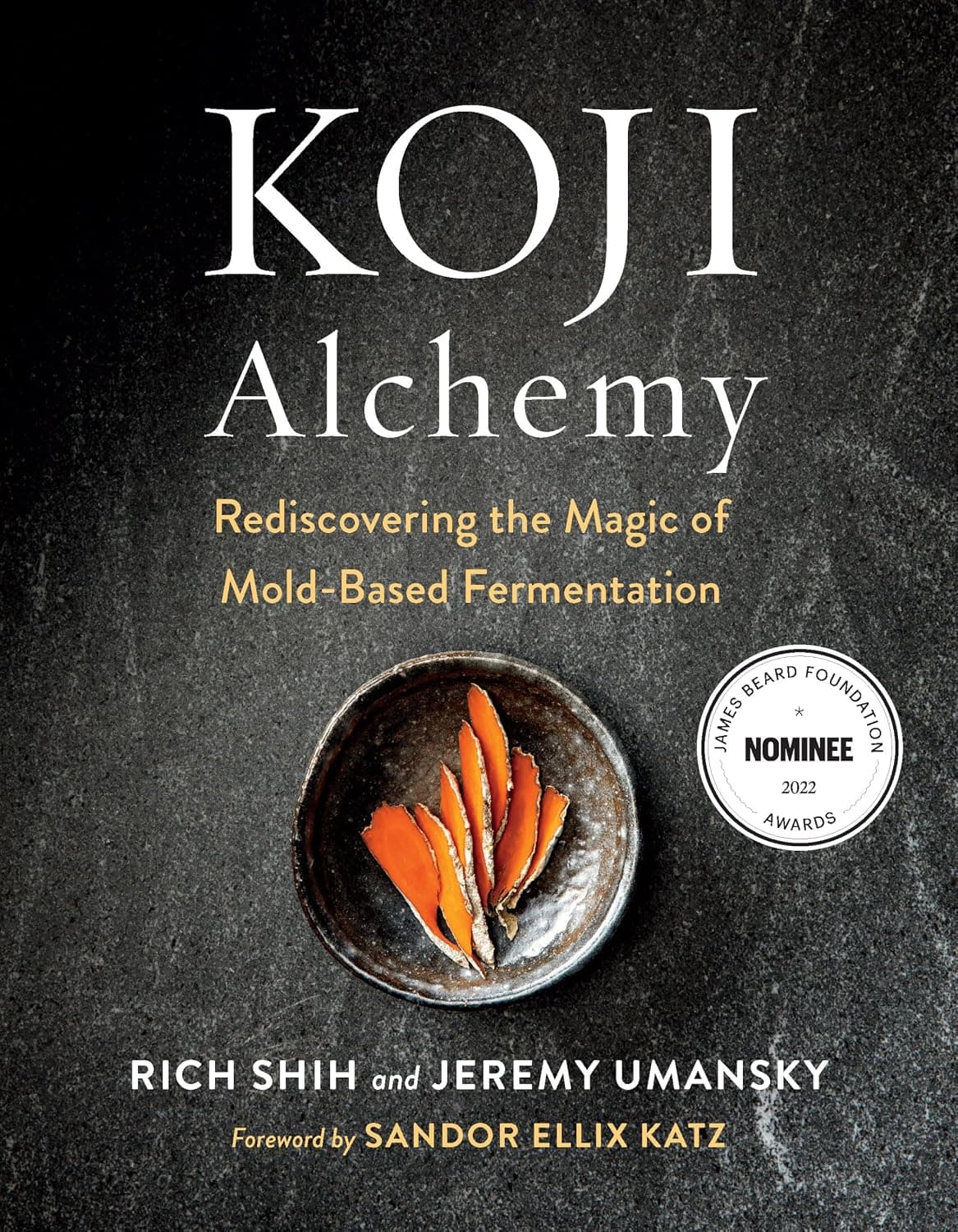
Koji Alchemy, a deep dive into rediscovering the magic of mold-based fermentation for miso, shoyu, amino pastes and more.
Price range: See on Amazon
What we liked
- + Focused coverage of koji growing, a topic most books only touch on
- + Explains how to build incubation setups for mold-based ferments
- + Pushes koji beyond Japanese staples into charcuterie and new flavors
Trade-offs
- - Advanced topic assumes readers are ready for temperature-controlled projects
- - Less useful for someone only making vegetable ferments
What makes this book different
Koji Alchemy, written by Jeremy Umansky and Rich Shih with a foreword by Sandor Ellix Katz, is positioned as the first book devoted specifically to the processes, concepts and recipes behind fermenting and culturing food with koji, the mold used to make traditional miso, shoyu and sake. It was published by Chelsea Green Publishing as a 352 page book in 2020 and was a finalist for a James Beard Foundation Book Award in the Reference and Scholarship category. That focus sets it apart from broader fermentation books that touch on koji briefly, since this one treats growing and applying koji as its central subject rather than one chapter among many.
What is inside
The book includes more than 35 recipes covering sauces, pastes, ferments and alcohol built around koji, moving from the basics of growing koji on grains or legumes through to using it in both traditional Japanese applications and less expected directions. Umansky in particular is known for pushing koji into charcuterie and other non-traditional uses, and the book reflects that experimental range rather than sticking only to miso and shoyu. Readers get both the underlying science of how koji breaks down starches and proteins and the practical steps for building finished products from that base.
The setup this book assumes
Growing koji reliably requires a warm, humid, temperature-controlled environment, and this book assumes readers are willing to build or adapt a space for that, whether that means a repurposed cooler, a dedicated incubation box or a proofing setup. That is a real jump from vegetable fermentation, where a jar on a counter is usually enough, and it is not a small side note in the book but a central part of getting the recipes to work. Anyone picking this up should expect to invest in equipment and troubleshoot temperature control as part of the learning process, not just follow a recipe start to finish.
Who it is not for
Someone whose fermentation interest stops at sauerkraut, kimchi or basic pickles will find little direct use for this book, since koji cultivation is a distinct skill from vegetable brine fermentation and the two do not overlap much in technique or equipment. The recipes also assume a baseline comfort with weighing ingredients precisely and tracking longer projects over days or weeks, which is a bigger ask than most vegetable ferment recipes require. Readers earlier in their fermentation journey are better served by a book focused on vegetables before adding a koji-specific title to their shelf, since attempting koji cultivation without that foundation can make early failures harder to diagnose and correct.
Who should buy it
This book suits a fermenter who already has some experience and wants to specialize in koji-based ferments such as miso, shoyu and amino pastes, or a cook interested in koji's more experimental uses in things like charcuterie. It also appeals to readers drawn to the science behind fermentation, given the depth of explanation alongside the recipes. It is a poor first fermentation book for a beginner, since it assumes both prior experience and a willingness to build dedicated incubation equipment before the recipes become practical to attempt, and readers who want that depth of explanation will likely get more value out of it than someone looking for a quick weekend project.
Frequently asked questions
Do I need special equipment to use this book?
Yes, for koji cultivation you will need a warm, humid, temperature-controlled space, such as a repurposed cooler or incubation box, which the book expects you to build or adapt.
Is this a good first fermentation book?
No. It focuses specifically on koji, which is a distinct skill from vegetable fermentation, so a beginner is better served starting with a broader fermentation guide.
Who wrote Koji Alchemy and how many recipes does it include?
Jeremy Umansky and Rich Shih wrote it, with a foreword by Sandor Ellix Katz, and it includes more than 35 recipes for sauces, pastes, ferments and alcohol.
Does it only cover traditional Japanese koji uses?
No, alongside traditional applications like miso and shoyu, it also covers more experimental uses of koji, including in charcuterie.
Prices change often, so check the current price and availability on Amazon.
Check price on AmazonFerment Nest may earn a commission from the link above.