The Big Book of Kombucha: Brewing, Flavoring, and Enjoying the Health Benefits of Fermented Tea Review (2026)
Updated September 14, 2026 · Research-based review
Our verdict
The most thorough single-topic kombucha reference around, written by the founders of Kombucha Kamp and covering everything from first SCOBY care to flavor development. It suits anyone who wants to go deep on kombucha specifically, but it offers little for readers who also want vegetable or dairy fermentation covered.
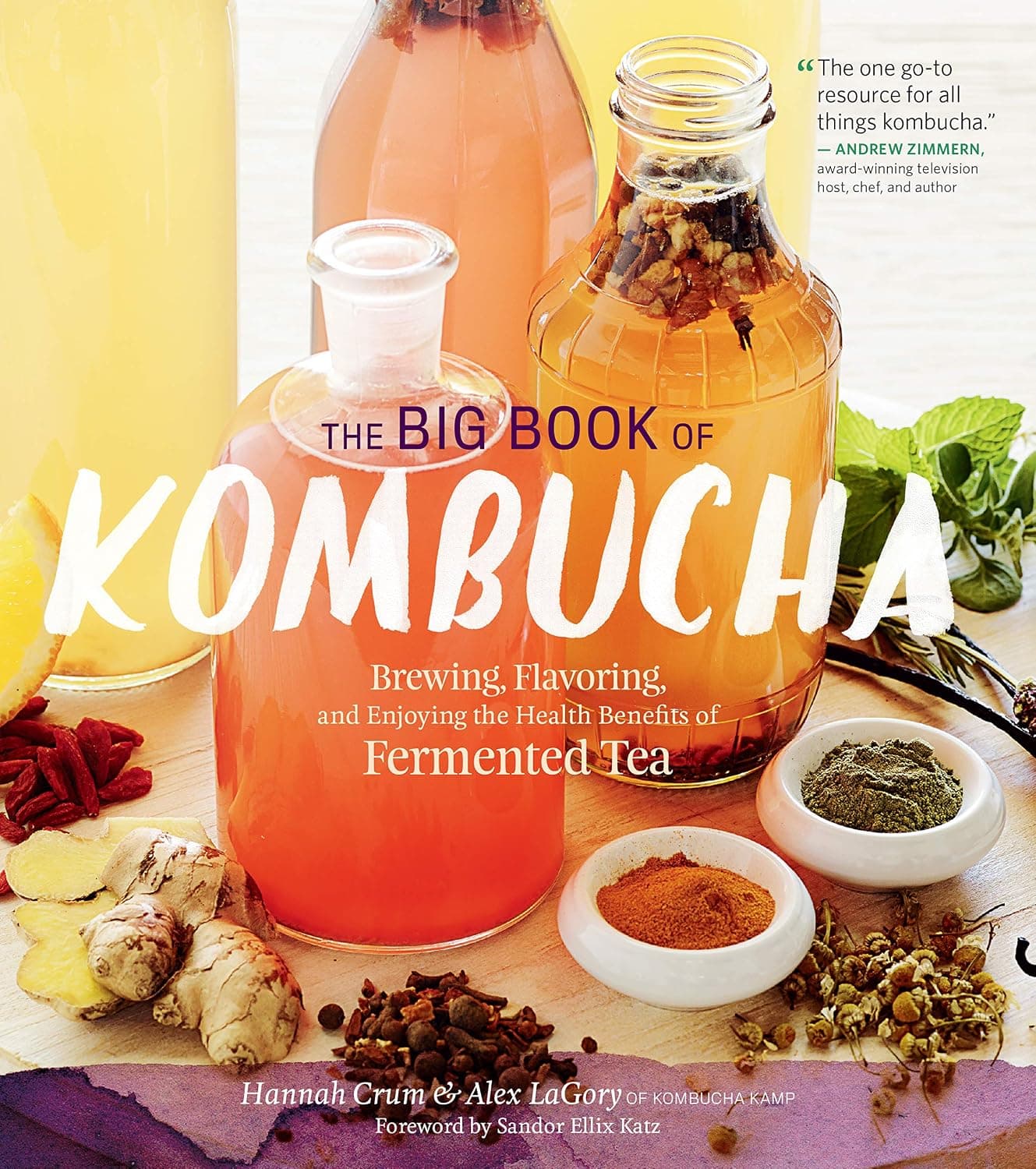
The Big Book of Kombucha, a complete guide to brewing, flavoring and enjoying fermented tea at home.
Price range: See on Amazon
What we liked
- + Focused entirely on kombucha, from SCOBY care to bottling
- + Large collection of flavor ideas keeps second ferments interesting
- + Troubleshooting sections help identify mold versus normal SCOBY growth
Trade-offs
- - Single-topic book offers little for vegetable or dairy ferments
- - Health benefit sections may read as enthusiastic rather than clinical
Who this book is written for
This is a dedicated kombucha reference by Hannah Crum and Alex LaGory, the founders of Kombucha Kamp, with a foreword contribution from fermentation author Sandor Ellix Katz. It suits readers who have decided kombucha is their main fermenting interest and want a single authoritative source rather than a general fermentation book with a short kombucha chapter. Beginners get a full walkthrough of starting a SCOBY and brewing a first batch, while more experienced brewers can use the flavoring chapters and troubleshooting sections to refine an established routine. Readers who want one book covering kombucha, sauerkraut, kimchi and other ferments together will find this too narrow, since it does not branch into vegetable or dairy fermentation.
What the book actually covers
The book is structured around the full kombucha process, starting with SCOBY care and first fermentation, then moving into flavoring and bottling for a fizzy second fermentation. According to the publisher and the authors' own description, it includes a large collection of recipes and flavor combinations, giving brewers many starting points once the base tea is ready to flavor. Troubleshooting content addresses common points of confusion, such as telling a healthy SCOBY from one showing signs of mold, which is one of the most common worries for new brewers. Background sections also cover the history of kombucha and its health-related claims, framed as introductory reading rather than a substitute for medical advice.
Reading it as a working brewing manual
As a practical reference, the book is organized so a first-time brewer can follow it from empty countertop to a finished, flavored bottle, then return to specific sections later as questions come up mid-batch. The troubleshooting material is likely to get the most repeat use, since visual problems like mold, unusual smells or a slow-starting SCOBY are the moments when a brewer most wants a quick, reliable answer rather than searching forums. The flavoring chapters function more like a recipe box that can be revisited every few batches as a brewer experiments with fruit, herbs or spices in the second fermentation. Because it is a physical or ebook reference rather than a kit, there are no materials or care instructions beyond the reading itself.
How it compares with other fermentation books
Against broader references like The Art of Fermentation or Wild Fermentation, which cover kombucha alongside vegetables, dairy and other ferments, this book trades breadth for depth, giving kombucha far more page space than a general fermentation guide ever could. Compared with Fermented Vegetables, which focuses on krauts, kimchis and brined pickles, the two books are complementary rather than competing, since one is kombucha-only and the other skips kombucha almost entirely. Readers building a small fermentation library often end up with both a general reference and a kombucha-specific one like this if they brew both types regularly, rather than treating either as a full replacement for the other.
Bottom line and who should choose a broader book instead
For anyone committed to kombucha specifically, this book's focused troubleshooting, flavoring ideas and SCOBY guidance make it a strong single-purchase reference, matching its solid marks for fit and value among fermentation books. It earns our score of 8.4 out of 10 largely on the strength of how completely it treats its one subject. Readers who are still deciding what kind of fermenting they want to do, or who want vegetable and dairy ferments covered in the same volume, are better served starting with a broader fermentation book and adding this one later if kombucha becomes a regular habit.
Frequently asked questions
Who wrote The Big Book of Kombucha?
It was written by Hannah Crum and Alex LaGory, the founders of Kombucha Kamp, with a contribution from fermentation author Sandor Ellix Katz.
Does this book cover other ferments besides kombucha?
No, it is focused entirely on kombucha, from SCOBY care through flavoring and bottling, so it offers little for vegetable or dairy fermentation.
Is this book good for a first-time kombucha brewer?
Yes, it walks through starting a SCOBY and brewing a first batch step by step, then serves as a reference for troubleshooting and flavor ideas afterward.
Does the book make medical claims about kombucha's health benefits?
It discusses commonly cited health benefits of fermented tea, but readers with specific health concerns should treat this as background reading and consult a medical professional for advice.
Prices change often, so check the current price and availability on Amazon.
Check price on AmazonFerment Nest may earn a commission from the link above.