Fiery Ferments: 70 Stimulating Recipes for Hot Sauces, Spicy Chutneys, Kimchis with Kick, and Other Blazing Fermented Condiments Review (2026)
Updated September 21, 2026 · Research-based review
Our verdict
Fiery Ferments is a focused follow-up for fermenters who already have basic kraut and pickles down and want to build heat into their pantry through hot sauces, spicy kimchis and fermented condiments. The 70 recipes reward readers who like heat, but the narrow spicy focus and some harder-to-source chilies will not suit everyone.
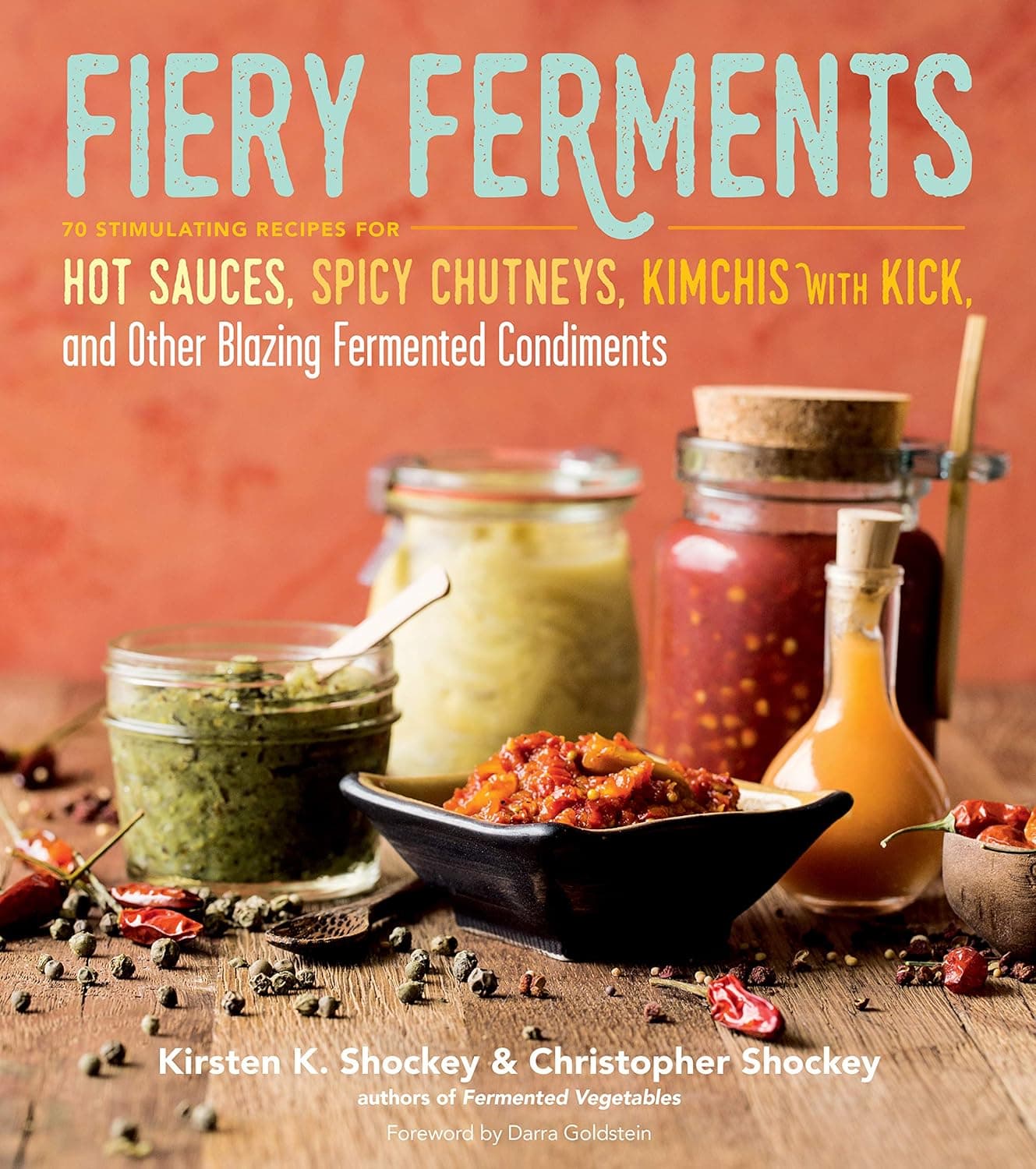
Fiery Ferments, a book of 70 stimulating recipes for hot sauces, spicy chutneys, kimchis with kick and blazing condiments.
Price range: See on Amazon
What we liked
- + 70 Stimulating Recipes focus on hot sauces and spicy condiments
- + Great follow-up for fermenters who already make kraut and want heat
- + Covers pepper mash and sauce techniques not found in general books
Trade-offs
- - Narrow spicy focus will not suit readers who avoid heat
- - Specialty chilies in some recipes can be hard to source
Who wrote it and where it fits
Fiery Ferments is written by Kirsten K. Shockey and Christopher Shockey, with a foreword by Darra Goldstein, and published by Storey Publishing as a 272 page paperback. The Shockeys are also the authors of Fermented Vegetables, and they built their background running a farmstead food company that produced dozens of varieties of cultured vegetables and krauts before turning to writing. Fiery Ferments follows that earlier book as a narrower, heat-focused companion rather than a general introduction to fermentation, so readers coming to it already understand it is a themed collection rather than a broad starting reference.
What the recipes cover
The book organizes more than 60 recipes for hot sauces, mustards, pickles, chutneys, relishes and kimchis drawn from traditions around the world, each built around fermented heat rather than fresh chili preparation. Beyond the core condiment recipes, it adds dozens of further recipes for breakfast dishes, snacks, entrees and beverages that put those fermented hot sauces and condiments to use once they are ready. That structure makes it as much a cooking book built around fermented heat as a straight fermentation manual, since a meaningful share of the content is about using the ferments rather than only making them.
Who gets the most from it
This book rewards someone who already has a jar of homemade kraut or basic pickles under their belt and wants to expand into spicier, more assertive fermented flavors, since the techniques build on lacto-fermentation basics rather than re-explaining them from the ground up in detail. Cooks who enjoy heat in their everyday food, and want to make their own fermented hot sauces and chili-forward condiments instead of buying them, are the clearest audience. Someone who avoids spicy food entirely will find little use for a book built almost entirely around building fermented heat into recipes.
Practical considerations before buying
A handful of the recipes call for specialty chili varieties that are not always easy to find at a typical grocery store, so some readers will need to seek out a specialty market or grow their own peppers to get the specific flavor a recipe is built around. That is a smaller barrier than the equipment demands of some advanced fermentation books, since the core process still relies on basic jars, salt and time rather than temperature-controlled incubation. It is worth skimming a chili list before starting a specific recipe to confirm sourcing is realistic for your area, and gardeners who grow their own peppers each season will likely have an easier time keeping up with the book's ingredient demands than someone relying entirely on store-bought produce.
Verdict
Fiery Ferments earns its place on the shelf of a fermenter who wants to push into hot sauces, spicy kimchis and fermented condiments after already getting comfortable with basic brine ratios and jar fermentation. Its narrow focus on heat is also its main limitation, since it is not built to teach fermentation from scratch or to serve someone who does not enjoy spicy food. Readers earlier in their fermentation journey, or those who prefer mild flavors, are better served starting with a broader introductory guide before adding this one to their collection later, once they already have a comfortable routine with basic krauts and pickles behind them.
Frequently asked questions
Do I need fermentation experience before using this book?
It helps. The recipes build on basic lacto-fermentation technique rather than teaching it from scratch, so readers with at least one prior kraut or pickle batch will find it easier to follow.
How many recipes does it include?
More than 60 recipes for hot sauces, mustards, pickles, chutneys, relishes and kimchis, plus additional recipes using those ferments in breakfasts, snacks, entrees and beverages.
Who wrote Fiery Ferments?
Kirsten K. Shockey and Christopher Shockey, who also wrote Fermented Vegetables, with a foreword by Darra Goldstein.
Is this a good first fermentation book?
Not really. It is a themed, heat-focused follow-up rather than a general introduction, so a broader beginner guide is a better first purchase.
Prices change often, so check the current price and availability on Amazon.
Check price on AmazonFerment Nest may earn a commission from the link above.