Burping Jars and Using Airlocks Without the Mess
Published How we research

Fermentation produces carbon dioxide, and carbon dioxide takes up space. In an open vessel it drifts away and nobody notices. In a sealed jar it has nowhere to go, so pressure builds until something gives. That something is usually the seal, which means brine seeping down the outside of the jar and onto your shelf, but occasionally it is the glass. Managing gas is therefore not an optional refinement. It is part of running a ferment safely and cleanly.
Products from this article
The highest-scoring picks from the buying guides this article links to. Scores are our editorial assessment, not customer ratings.
+ Stainless steel lids will not rust or warp like painted tin mason lids
From our guide: Best Airlock Lids
+ 64 Vegetables and Herbs are covered one by one, handy for gardeners with gluts
From our guide: The Best Fermentation Books Worth Owning
+ Clear glass lets you check brine level and color without opening the jar
From our guide: Best Fermentation Jars
+ Pack of 4 lets you run several ferments at once in jars you already own
From our guide: Best Airlock Lids
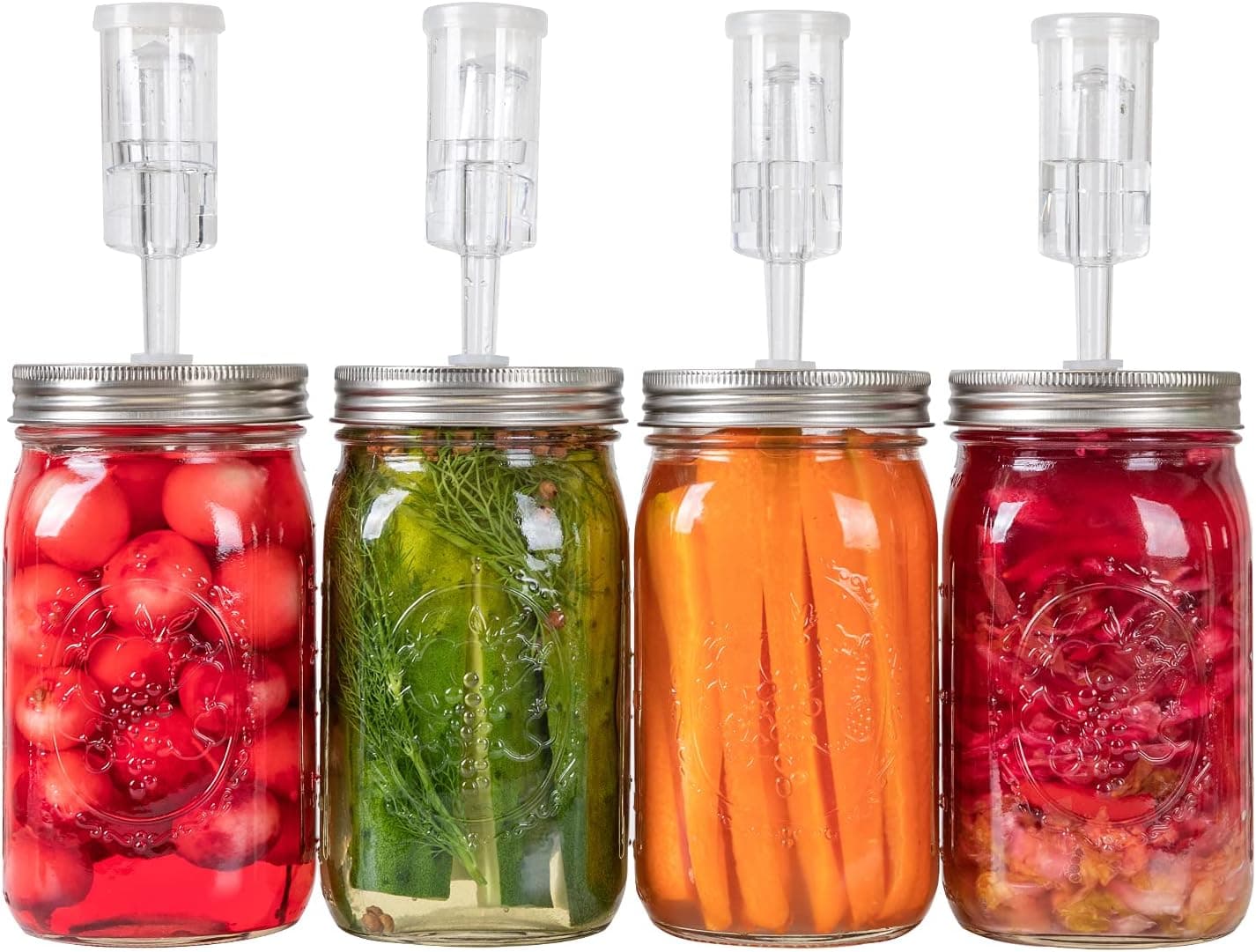

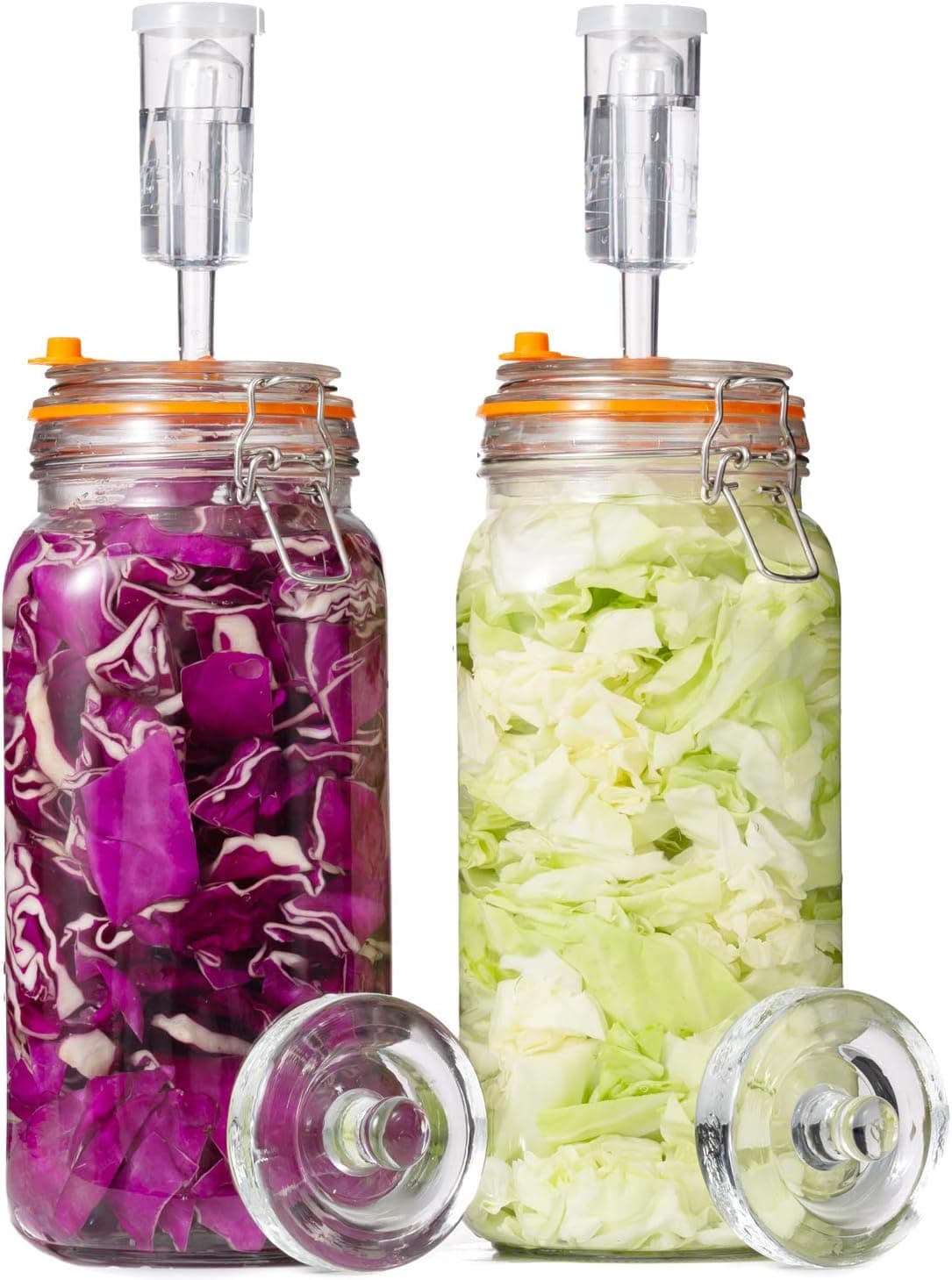
Burping simply means opening the lid briefly to let gas escape, then closing it again. For a vigorous vegetable ferment in a warm room during the first week, once a day is a sensible habit, and twice a day is not excessive if the jar is very full. Loosen the lid slowly and listen for the hiss. Keep the jar upright and expect a little foaming as dissolved gas comes out of solution. Press the vegetables back under the brine with a clean utensil, wipe the rim, and reseal. Activity peaks in the first three to five days and then tapers off, so burping becomes less urgent as the batch matures.
An airlock removes the need to remember. The design is simple. A one way path lets gas out while stopping air from coming in, either through a small volume of water the bubbles pass through or through a silicone valve that opens under pressure. The headspace above your ferment fills with carbon dioxide, which is heavier than air and sits protectively over the surface. That is why airlock users notice fewer problems with kahm yeast and surface mould even though nothing else about their method has changed.
Water based airlocks are the traditional choice and they are satisfying because you can see the bubbling. They need the water level checked occasionally, since it evaporates, and they are slightly awkward to store. Silicone valve lids are lower maintenance and stack easily, though they give no visual feedback about whether anything is happening. Both work well. Whichever you use, the lid still has to be tightened properly, because a poorly seated gasket vents around the edge and defeats the purpose.
Airlocks do not eliminate mess, they relocate it. A jar packed too full will push brine up into the airlock as it expands, so leave a good few centimetres of headspace and always stand jars on a plate or in a shallow tray. If brine does reach the airlock, clean it, top up the water if it is that type, and refit. It is also worth noting that an airlock is unnecessary for a ferment already in the refrigerator, where gas production has slowed to almost nothing and a normal lid is fine.
Kombucha needs the opposite treatment at different stages, which confuses people. During the first ferment you want a breathable cloth cover, not an airlock, because the bacteria involved need oxygen and the gas should escape freely. During the second ferment in bottles you deliberately trap gas to create fizz, so sealed pressure rated bottles are the point. There you burp one designated test bottle to gauge progress and refrigerate the batch once the carbonation sounds right, rather than trying to vent every bottle.
The habits that prevent trouble are unglamorous. Leave headspace, use a tray, choose bottles rated for pressure when carbonating, and either burp on a schedule or fit an airlock so you do not have to. If you go away for a few days during an active first week, move the jar to the refrigerator rather than hoping. Cold slows the microbes, the pressure stops climbing, and you can resume at room temperature when you are back.
Popular right now
- Brine Pickles or Vinegar PicklesArticle
- Water Quality and Chlorine in Home FermentationArticle
- The Best Vacuum Seal Bags for FermentationBuying guide
- Backslopping explainedGlossary
- Best Koji Starter SporesBuying guide
- Fermentation TemperatureArticle
Based on the last 28 days of search and visitor data.